Table of contents
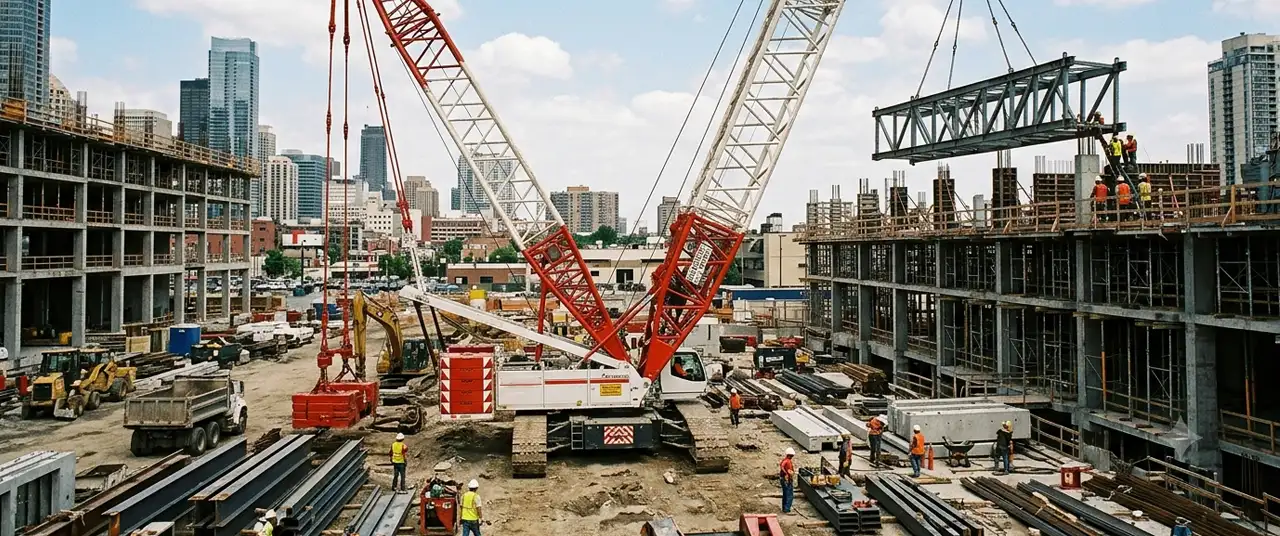
Whenever you watch a massive construction crane effortlessly swing a multi-ton steel beam across a job site, you are witnessing an incredible feat of heavy engineering. But how exactly does the top half of the crane rotate without detaching from its base?
If you are new to the heavy machinery industry or researching replacement parts, you will inevitably ask: “What is a slewing ring on a crane?”
In this comprehensive guide, we will break down the exact definition of this component, explore the mechanics of how a crane rotates, and outline the maintenance required to keep your job site safe.
The Core Function: What is a Slewing Ring on a Crane?
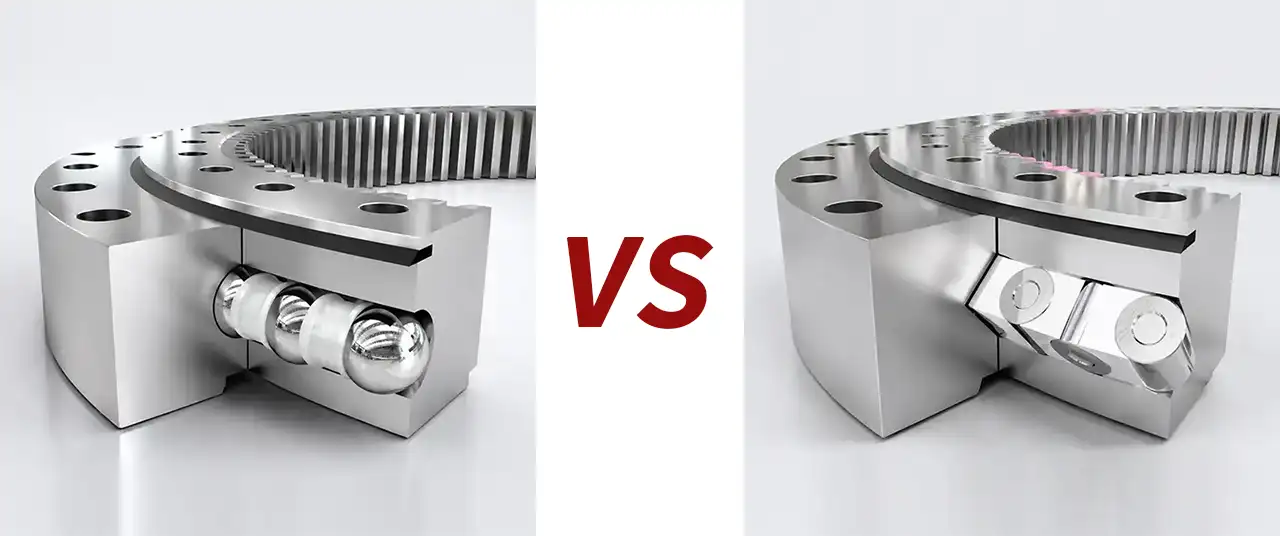
At its most basic level, a slewing ring (often called a slewing bearing or turntable bearing) is a massive, heavy-duty rotational rolling-element bearing.
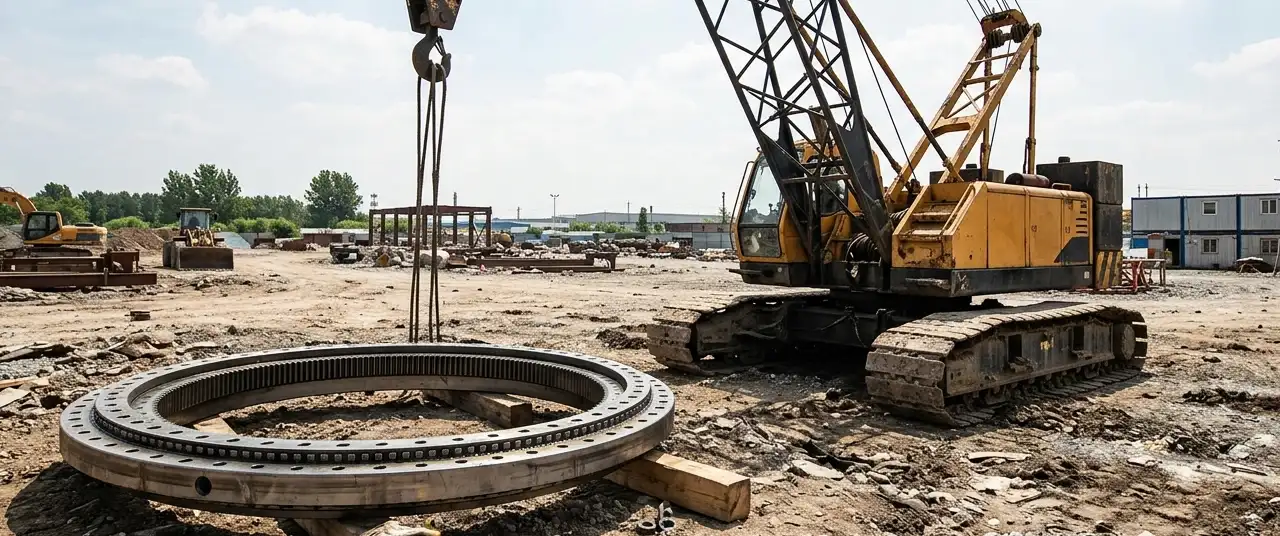
In crane applications, it serves as the critical structural joint that connects the stationary base (like the crawler tracks, truck bed, or vertical mast) to the rotating upper structure (the cab and the boom/jib).
Its primary slewing ring function is to allow smooth, 360-degree rotation while simultaneously supporting enormous, complex forces:
Axial Loads: The downward weight of the crane’s upper structure and the payload being lifted.
Radial Loads: The horizontal forces pressing against the crane, primarily caused by heavy winds.
Overturning Moment: The extreme twisting force created when the crane lifts a heavy load at the far end of its boom.
How Does a Crane Rotate? The Mechanics Explained
Understanding the crane slewing mechanism requires looking at how the bearing interacts with the rest of the machinery.
Most crane slewing rings are manufactured with gear teeth cut directly into either their inner or outer circumference. To make the crane rotate, the operator engages a hydraulic or electric slewing motor located in the upper cab.
This motor is connected to a small drive gear (the pinion). As the pinion gear spins, its teeth mesh with the gear teeth on the slewing ring, effectively “walking” the entire upper cab around the stationary base.
Cranes That Rely on Slewing Rings
Virtually every piece of rotational lifting machinery relies on this technology, but the specific bearing design varies based on the crane type:
- Mobile Truck Cranes: Typically use standard single-row or double-row ball bearings to balance weight constraints with lifting capacity.
- Crawler Cranes: Require heavier, more robust bearings to handle the harsh vibrations of off-road terrain.
Tower Cranes: A tower crane slewing ring is located hundreds of feet in the air, connecting the vertical mast to the horizontal jib. These require impeccable precision and frequent inspections.
Offshore Cranes: Use massive three-row cylindrical roller bearings equipped with anti-corrosion coatings to survive harsh saltwater environments.
Signs You Need a Crane Slewing Bearing Replacement
Because they endure such intense mechanical stress, slewing rings eventually wear out. Catching the signs of fatigue early can prevent catastrophic accidents and expensive downtime.
You may need a crane slewing bearing replacement if you notice:
- Loud Grinding or Popping: Any crunching noises during rotation indicate that the internal balls or rollers are damaged or that the raceway is pitted.
- Metal Flakes in the Grease: When pumping fresh grease into the bearing, check the old grease that purges out. Shiny metal shavings are a major red flag for internal wear.
- Excessive Play (Rocking): If the crane’s upper cab tilts or rocks back and forth when picking up or dropping a load, the internal clearances of the bearing have worn down to dangerous levels.
Uneven Gear Wear: Inspect the gear teeth. If they are wearing out unevenly or tapering to a sharp edge, the slewing mechanism is misaligned.
Maintenance Tips to Extend Bearing Life
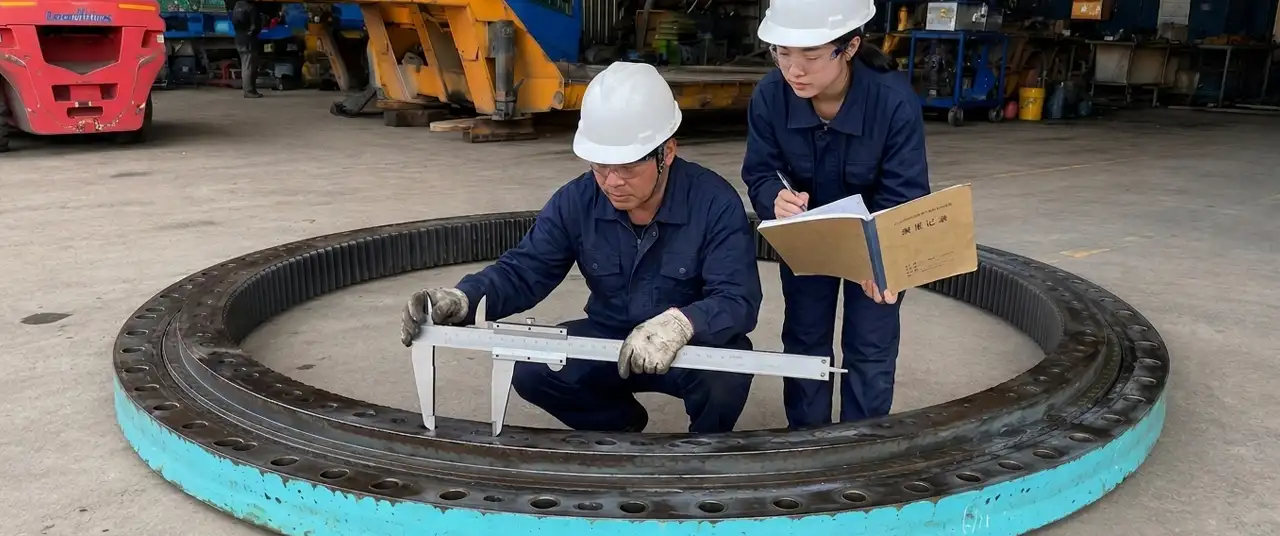
Replacing a slewing ring is a massive, costly undertaking. To maximize the lifespan of your current bearing, adhere to strict maintenance protocols:
- Grease Regularly: You must inject extreme-pressure (EP) grease into the raceway fittings frequently. Always rotate the crane while greasing to ensure the lubricant coats the entire internal track.
Check the Rubber Seals: The seal prevents abrasive dirt and rainwater from entering the bearing. If a seal is cracked or missing, replace it immediately.
- Inspect Bolt Torques: The high-tensile bolts securing the bearing to the crane will naturally stretch and loosen from vibration. Use a hydraulic torque wrench to verify they meet the manufacturer’s specifications during every major service interval.