FDON Group

Home / Blog / What does a slewing ring do?

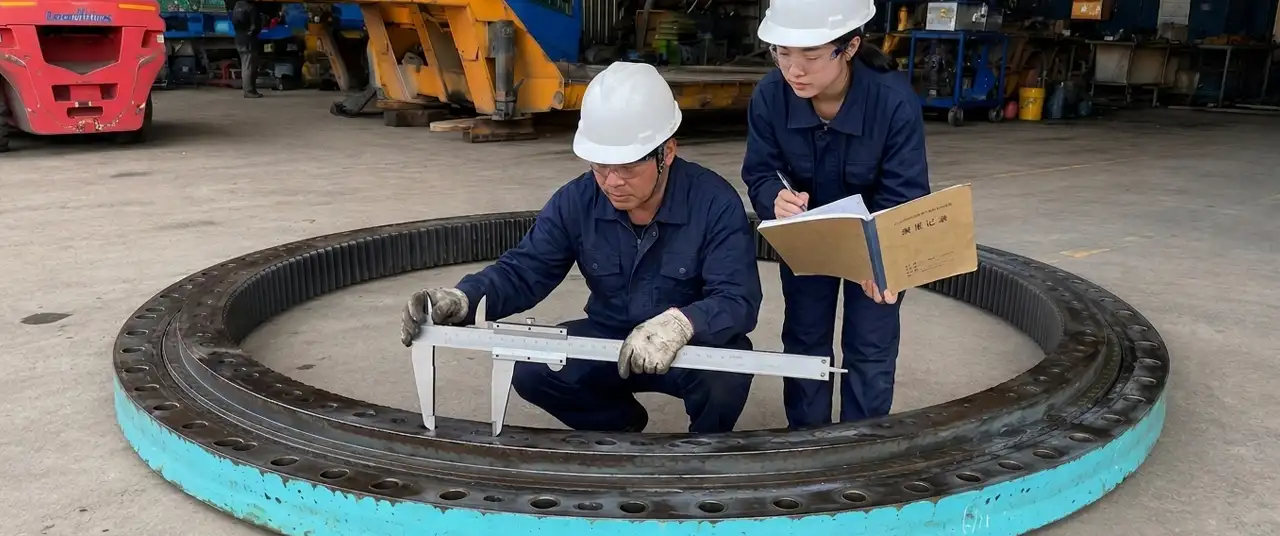
A slewing ring (also known as a slewing bearing or turntable bearing) is a heavy-duty rotational component designed to support massive loads while allowing 360-degree rotation.

Think of it as the “giant joint” of a machine. While a standard ball bearing in a skateboard or a fan allows for high-speed rotation with light loads, a slewing ring is built for the opposite: slow-speed rotation under immense pressure.

1. Supporting Complex Loads

The primary function of a slewing ring is to manage three types of forces simultaneously. In engineering, these are known as:

Axial Load: The vertical weight pressing down (e.g., the weight of a crane’s boom and its cargo).

Radial Load: The horizontal force (e.g., the side-to-side movement or wind hitting a wind turbine).

Tilting Moment: The “tipping” force that occurs when a heavy load is extended far from the center of rotation.

2. Enabling Precise Rotation

Slewing rings allow one part of a machine to rotate relative to another. For example:

In Excavators: It connects the undercarriage (tracks) to the upper cabin, allowing the operator to swing the bucket 360 degrees without moving the tracks.

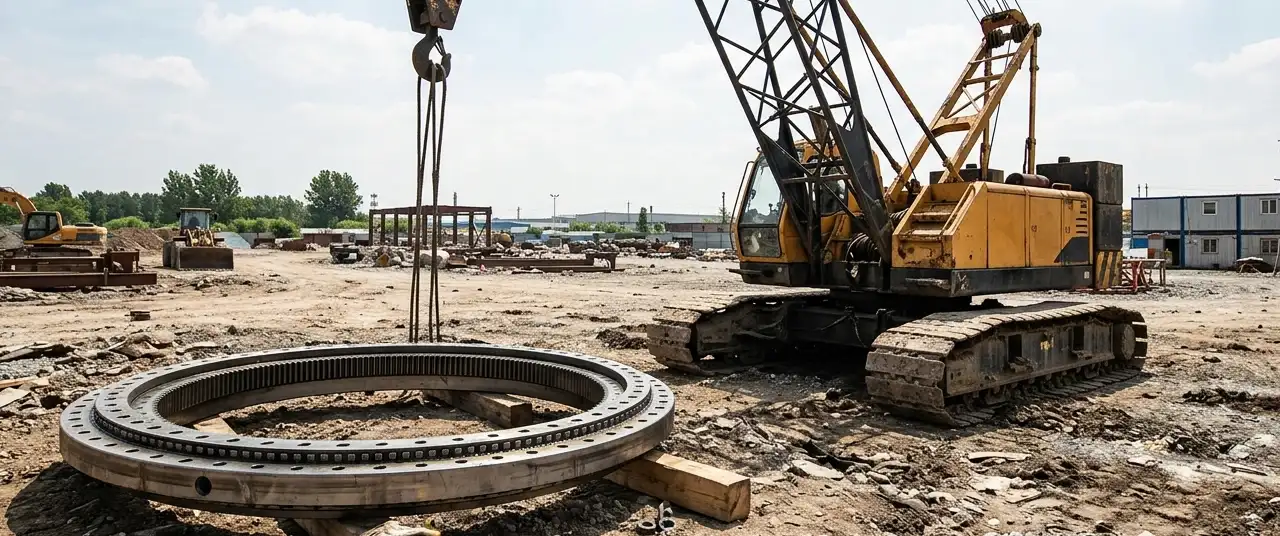
In Cranes: It allows the boom to swivel to move cargo from one point to another.

3. Integrated Power Transmission (The Gear)

Most slewing rings feature an integrated gear (either on the inner or outer ring). This gear meshes with a smaller drive pinion. When the motor turns the pinion, it drives the entire slewing ring, causing the massive upper structure of the machine to rotate.

Common Applications

Because they are space-saving and replace the need for multiple smaller bearings, they are found in:

Construction: Excavators, tower cranes, and tunnel boring machines.

Renewable Energy: Wind turbine pitch and yaw systems (allowing blades to turn toward the wind).

Medical: CT scanners and X-ray equipment.

Industrial: Bottling plants, assembly lines, and rotary tables.

Key Components
A typical slewing ring consists of:

  • Inner and Outer Rings: One is usually bolted to the stationary base, and the other to the rotating component.
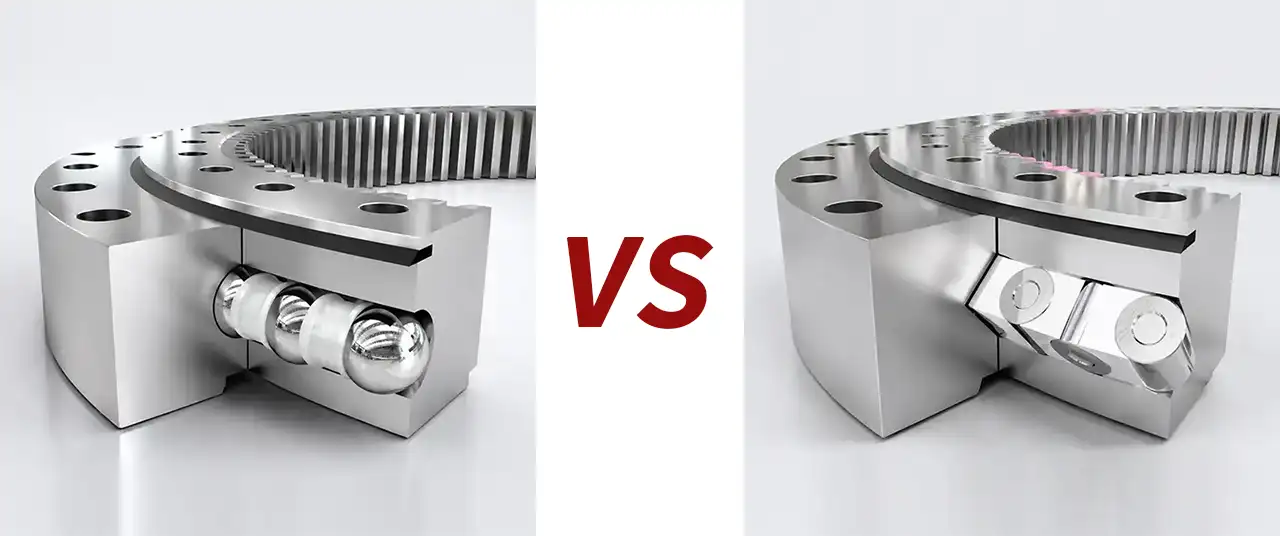
  • Rolling Elements: Balls or rollers that reduce friction between the rings.
  • Seals: To keep lubricants in and contaminants (like dust and water) out.
  • Mounting Holes: Pre-drilled holes for high-strength bolts, as these bearings are bolted directly to the machine surface rather than being pressed onto a shaft.

In short, the slewing ring is what makes it possible for the world’s heaviest machinery to move with precision and safety.

Are you looking for information on a specific application, like construction or wind energy?

Frequently Asked Questions

Expert Insights and Reliable Solutions to Your Most Common Questions.

FDON GROUP supplies a full range of slewing bearings to meet different industrial needs:

  • Single row four point contact slewing bearings Application: medium loads, precise rotation.
  • Double row ball bearings  Application: higher radial and axial loads.
  • Cross roller bearings –Application: high rigidity, suitable for robots and machining centers.
  • Three row roller bearings – Application: extreme loads in heavy equipment.
  • Ball combine roller bearings –Application:  precise rotational adjustment applications.
  • Customized bearings – tailored for specific equipment requirements.

Typical selection parameter for FDON clients:

Load type: axial, radial, and tilting moment.

Rotation RPM: ensures long service life.

Installation space & mounting dimensions: inner/outer ring diameter, bolt circle.

Precision & rigidity requirements: critical for cranes, excavators, and robots.

FDON engineers provide professional selection guidance according to your equipment and drawings.

FDON GROUP selects materials for strength, wear resistance, and long-term durability:

Slewing ring: 42CrMo, 50Mn, C45N, 40CrNiMo, C48E.

Special forging spare parts: carburized/hardened steels for gear teeth (20CrMnTi, 18CrNiMo7‑6).

Corrosion resistant: SS 304, 316L, duplex stainless steel.

Surface treatments: heat treatment, quenching, carburizing, induction hardening, and surface coating(Four-Layer Packing, Strong Anti-Rust Oil, Black Oxide Treatment, Jet Black Paint Finish, Hot-Dip Galvanizing (CGL), Electro-Galvanizing (EGL), Hot-Dip Galvanizing + Paint Finish)

Correct installation with flat surfaces.

Proper lubrication using grease.

Avoid overloading or shock loads over capacity.

Monitor operating conditions regularly to prevent debris entry.

Typical factors observed by FDON engineers:

  • Insufficient or incorrect lubrication.
  • (dust, metal particles) in raceways.
  • Rolling element or track damage.
  • Uneven mounting surfaces or misalignment.
  • Incorrect bolt torque(below grade 8.8) or preloading.

In-stock: 3–7 days.

Custom: 2–6 weeks depending on size, load, and precision.

Warranty: 1 year

Lifetime Free Spare Parts: Glue, seals, steel ball

Yes — FDON GROUP offers:

Detailed installation manuals.

Online engineering support.

Guidance for lubrication, maintenance, and troubleshooting solution.

Full range of materials and heat treatments for various load conditions.

High precision and strict quality inspection standards.

Engineering support before and after delivery.

Customization to exact equipment requirements.

Proven performance in cranes, excavators, robotics, wind turbines, and heavy machinery etc.

Happy Woman Headset Scaled.jpg
Latest news
Latest news