Table of contents
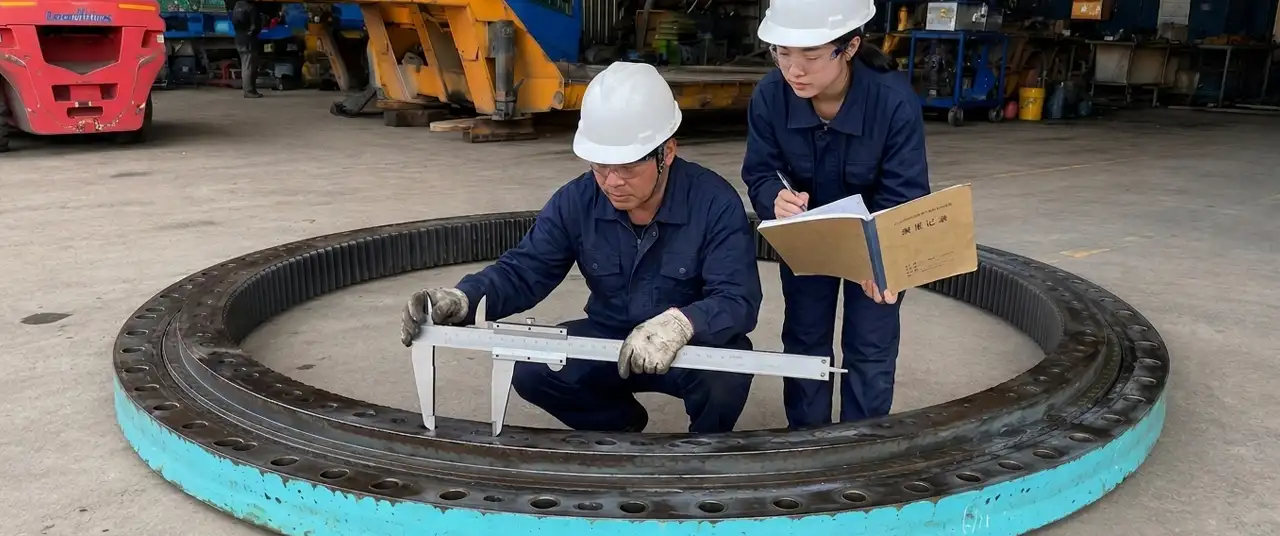
When engineering heavy machinery that requires smooth, 360-degree rotation under immense loads, standard bearings simply will not cut it. This is where the slewing ring (often called a turntable bearing) comes into play.
If you are an engineer, procurement manager, or machinery enthusiast, understanding the various slewing ring types and their applications is critical for ensuring the safety, efficiency, and longevity of your equipment. In this comprehensive guide, we will break down the mechanics of these rotational giants, explore the different categories available, and highlight where they are used across major industries.
What is a Slewing Ring Bearing?
Before diving into the specific types, it is important to define what sets these components apart. A slewing ring is a large-size, rolling-element bearing engineered to accommodate complex loads simultaneously. This includes:
- Axial Loads: The downward weight of the machinery.
- Radial Loads: Side-to-side forces acting on the equipment.
- Moment (Overturning) Loads: The twisting forces generated when a heavy load is suspended off-center.
Furthermore, they often come with pre-drilled mounting holes and integrated gear teeth (internal or external), making them a self-contained structural joint.
The Main Slewing Ring Types and Their Applications
When browsing a heavy-duty turntable bearing catalog, you will encounter several distinct internal configurations. Here is a breakdown of the four primary slewing bearing types:
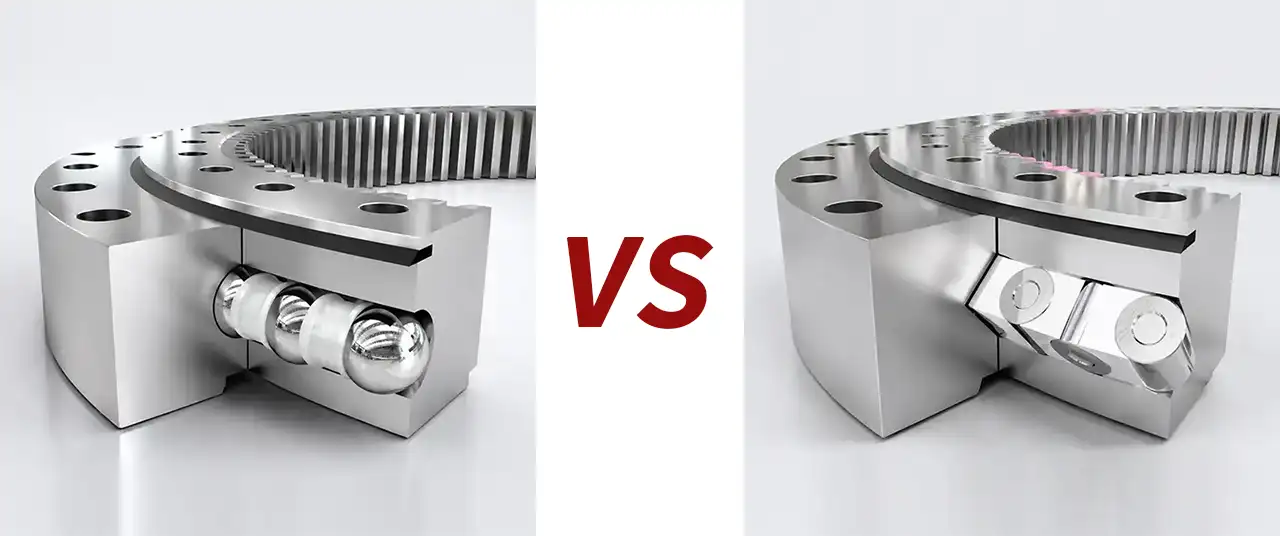
1. Single-Row Four-Point Contact Ball Slewing Rings
This is the most popular and versatile type on the market. It features a single row of steel balls that contact the raceway at four points. This design provides a highly cost-effective balance between weight capacity and compact sizing.
- Best For: Moderate loads where space and weight are considerations.
- Common Applications: Light-to-medium construction equipment, industrial turntables, automated packaging machinery, and small cranes.
2. Double-Row Ball Slewing Bearings
As the name suggests, this design incorporates two rows of steel balls. By distributing the load across two rows, this bearing offers significantly higher stability and a larger load capacity than the single-row variant, while still maintaining relatively low friction.
- Best For: Heavy, fluctuating loads requiring a high safety factor.
- Common Applications: Mining equipment, large material handling cranes, and forestry harvesting machinery.
3. Crossed Cylindrical Roller Slewing Rings
Instead of spherical balls, this bearing uses cylindrical rollers arranged in a crisscross pattern (at right angles to each other). Consequently, this design provides exceptional rigidity, high rotational accuracy, and high resistance to deformation.
- Best For: Applications demanding high precision and stiffness with minimal vibration.
- Common Applications: Industrial robotics, radar antennas, precision machine tools, and medical equipment (like CT scanners).
4. Three-Row Roller Slewing Bearings
This is the ultimate heavy-duty turntable bearing. It utilizes three distinct rows of cylindrical rollers to handle axial, radial, and moment loads entirely independently. Because the loads are separated, the rollers can be smaller, making the bearing highly compact relative to its massive load capacity.
- Best For: Extreme loads and harsh industrial environments.
- Common Applications: Offshore drilling rigs, massive ship-to-shore port cranes, bucket-wheel excavators, and heavy-duty ladles in steel mills.
Technical Comparison: Choosing the Right Bearing
To help you visualize the differences, here is a quick comparison table to guide your selection process:
| Bearing Type | Load Capacity | Rotational Precision | Rigidity | Typical Cost |
| Single-Row Ball | Moderate | Standard | Moderate | Low |
| Double-Row Ball | High | Standard | High | Medium |
| Crossed Roller | High | Very High | Very High | Medium – High |
| Three-Row Roller | Extreme | High | High |
Pro Tip: Always consult a load capacity chart and calculate your maximum overturning moment (M = F \times L) before finalizing your bearing selection.
Expanding on Key Industrial Applications
Understanding slewing ring types and their applications means looking at how these components drive modern infrastructure.
Renewable Energy (Wind and Solar)
The green energy sector is one of the largest consumers of slewing rings. Wind turbine bearings are critical for both the yaw mechanism (turning the nacelle to face the wind) and the pitch mechanism (angling the blades). Similarly, solar trackers use slewing drives to slowly rotate panels to follow the sun’s trajectory.
Construction and Earthmoving
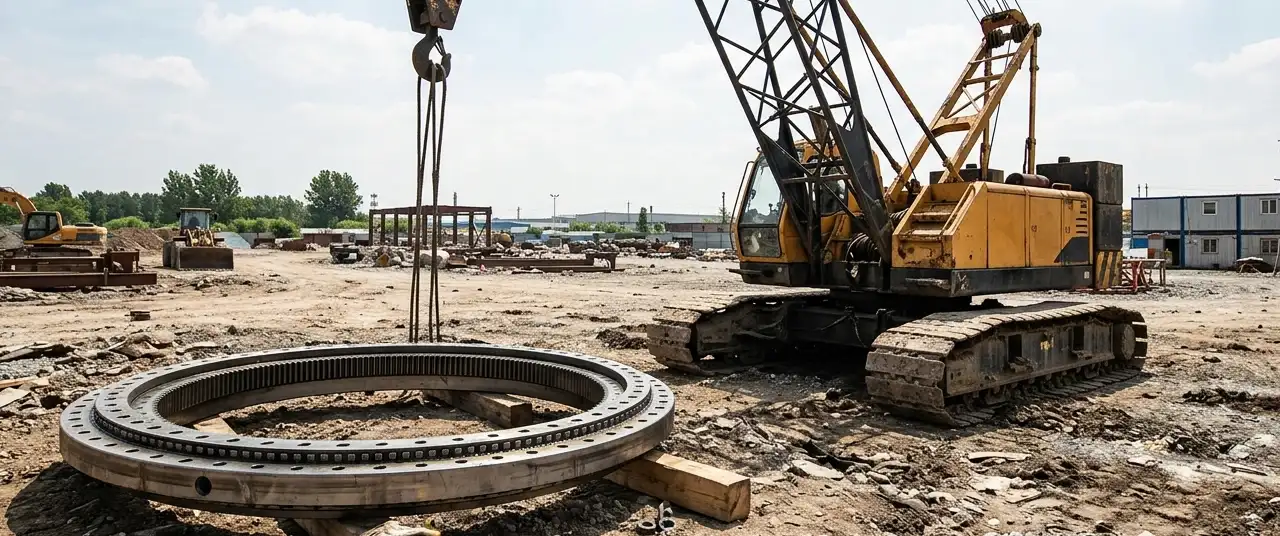
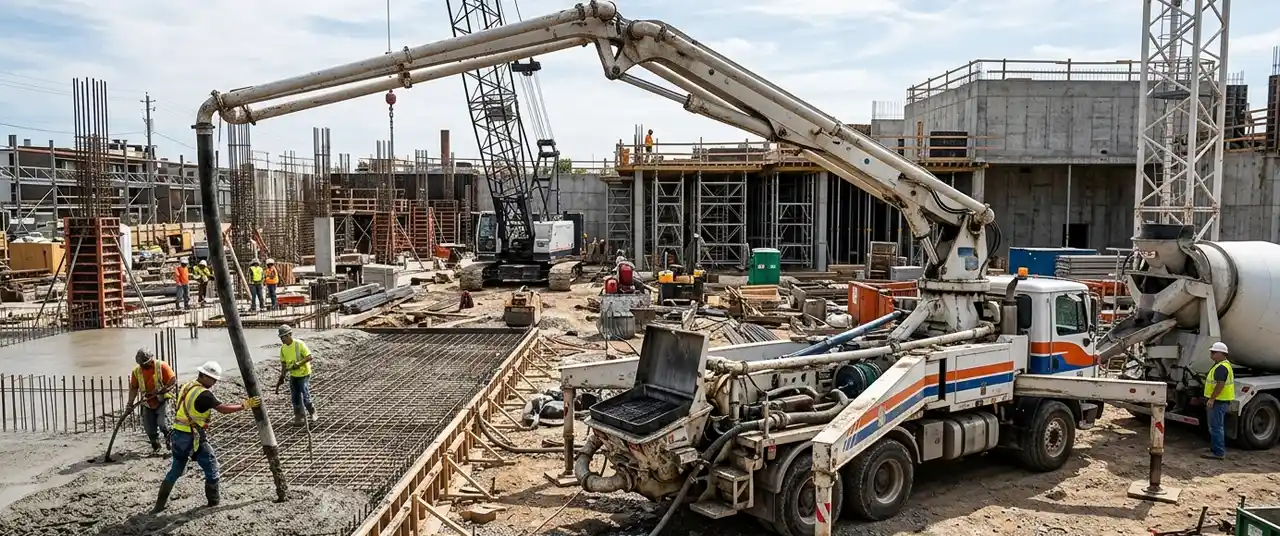
The quintessential excavator slewing ring (or swing circle) allows the upper cab to rotate 360 degrees independently of the heavy tracks below. Tower cranes and concrete pump trucks also rely heavily on large-diameter ball bearings to manage massive counter-weights and extended jibs.
Medical and Robotics
In environments where noise and vibration must be eliminated, crossed roller bearings shine. They provide the whisper-quiet, ultra-precise rotation needed for MRI machines and the intricate multi-axis movements of automated robotic arms.
Maintenance Tips for Longevity
Even the best-engineered slewing ring will fail prematurely without proper maintenance. To protect your investment:
- Regular Lubrication: Pump high-pressure grease into the raceways and onto the gear teeth regularly. Rotate the bearing during greasing to ensure even distribution.
- Torque Checks: Slewing rings are bolted into place. Machine vibration can loosen these bolts over time. Regularly check and re-torque the mounting bolts.
- Seal Inspection: Ensure the rubber seals are intact to keep abrasive dust and water out of the delicate internal rolling elements.
Conclusion
From the single-row ball bearings moving light conveyor belts to the massive three-row roller bearings supporting offshore cranes, the diversity of these components is astounding. By thoroughly understanding the different slewing ring types and their applications, you can ensure that your machinery operates smoothly, safely, and efficiently under the most demanding conditions.
Are you looking to specify a high-quality turntable bearing for your next engineering project? [Insert Internal Link: Browse our full slewing ring catalog here] or [Insert Internal Link: Contact our engineering team for a technical consultation].