When you watch a massive construction crane effortlessly rotate while lifting heavy loads, you might wonder how it achieves such smooth movement without toppling over. The secret lies in a critical, heavy-duty component: the slewing bearing in crane machinery.
This vital part ensures stability, supports immense weight, and enables the crane’s upper structure to rotate freely. In this comprehensive guide, we will explore exactly what a slewing bearing is, why it matters, and how to maintain it for optimal on-site performance.
| Automobile Crane Slewing Bearing | |||||||||||||||
|---|---|---|---|---|---|---|---|---|---|---|---|---|---|---|---|
| Machine Type | OUTLINE DIMENSIONS | OUTER RING | INNER RING | Number teeth | |||||||||||
| di | Da | H | Ho | na | Bo | Hi | ni | Bi | Z2 | Price | |||||
| tadano z 300 | 240 | 456 | 76 | 66 | 10 | M18 | 54 | 19 | φ20 | 74 | RMB 1,299 | ||||
| unic 330 | 240 | 456 | 76 | 66 | 11 | M16 | 54 | 19 | φ20 | 74 | RMB 1,299 | ||||
| soosan330 | 240 | 456 | 76 | 66 | 11 | M16 | 54 | 19 | φ20 | 74 | RMB 1,299 | ||||
| JET 35 | 260 | 460 | 84 | 70 | 14 | φ18 | 64 | 17 | φ18 | 90 | GET QUOTE | ||||
| Kato 45 | 280 | 522 | 81 | 70 | 9 | M20 | 58 | 23 | φ21 | 85 | GET QUOTE | ||||
| unic 500 | 295 | 546 | 78.5 | 71 | 14 | M18 | 61 | 23 | φ22 | 89 | GET QUOTE | ||||
| kanglim 1256 | 340 | 594 | 104 | 89 | 14 | M20 | 87 | 23 | φ21 | 97 | GET QUOTE | ||||
| HTS1756 | 352 | 600 | 100 | 85 | 12 | M22 | 79 | 23 | φ22 | 98 | GET QUOTE | ||||
| soosan 736 | 352 | 600 | 99 | 84 | 12 | M22 | 79 | 23 | φ23 | 98 | GET QUOTE | ||||
| SS1926 | 369 | 612 | 90 | 75 | 16 | M20 | 67 | 23 | φ21 | 100 | GET QUOTE | ||||
| CSS176M | 370 | 624 | 105 | 90 | 18 | M20 | 88 | 23 | φ22 | 102 | GET QUOTE | ||||
| SOOSAN 746 | 430 | 660 | 100 | 84 | 15 | M22 | 79 | 23 | φ23 | 108 | GET QUOTE | ||||
| Kanglim ks2056 | 430 | 660 | 105 | 85 | 14 | M22 | 80 | 23 | φ23 | 107 | GET QUOTE | ||||
| SOOSAN 915m | 495 | 736 | 95 | 75 | 21 | M22 | 75 | 29 | φ23 | 90 | RMB 3,200 | ||||
| Hiab 190 | 506 | 732 | 85 | 70 | 26 | M20 | 65 | 16 | φ22 | 120 | GET QUOTE | ||||
| Aichi 502 | 600 | 816 | 70 | 59 | 24 | φ19 | 65 | 22 | M18 | 134 | GET QUOTE | ||||
| AICHI 507 | 600 | 816 | 66 | 58 | 24 | φ19 | 60 | 26 | M18 | 134 | GET QUOTE | ||||
| DT600 | 608 | 816 | 58 | 50 | 30 | φ18 | 50 | 29 | M18 | 134 | GET QUOTE | ||||
| AICHI 705 | 675 | 863 | 82 | 58 | 24 | M18 | 64 | 24 | φ19 | 142 | GET QUOTE | ||||
| SOOSAN SCS1616 | 700 | 976 | 95 | 85 | 26 | M22 | 81 | 35 | φ22 | 96 | RMB 4,260 | ||||
What is a Slewing Bearing in a Crane?
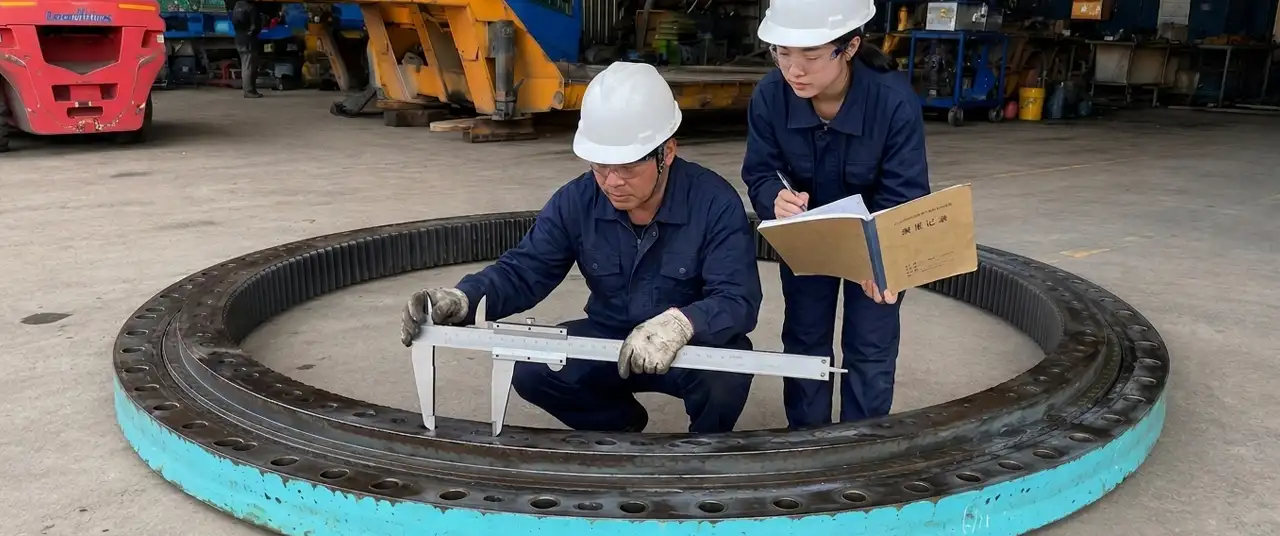
A slewing bearing, often referred to as a slewing ring or turntable bearing, is a large rotational rolling-element bearing. It is specifically designed to support heavy, slow-turning, or slow-oscillating loads.
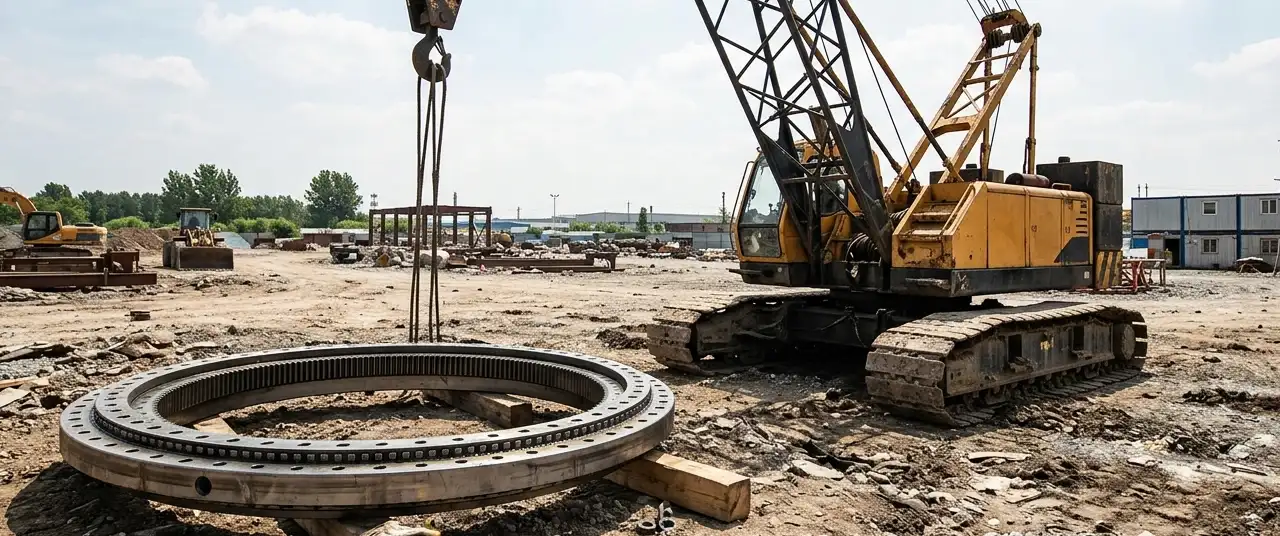
In a practical sense, the slewing bearing in crane applications acts as the pivotal joint between the crane’s stationary undercarriage and the rotating upper structure (the superstructure). Unlike standard bearings you might find in car wheels, slewing bearings are engineered to handle complex forces simultaneously. This includes:
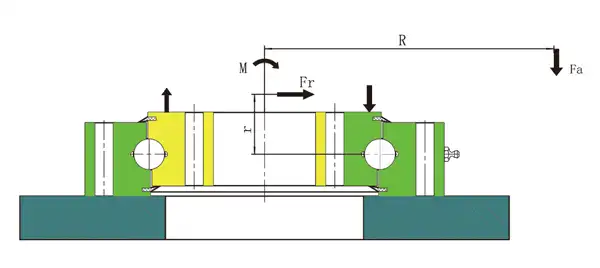
Fig 1. Supported Mounting Of Slewing Bearing Force Diagram
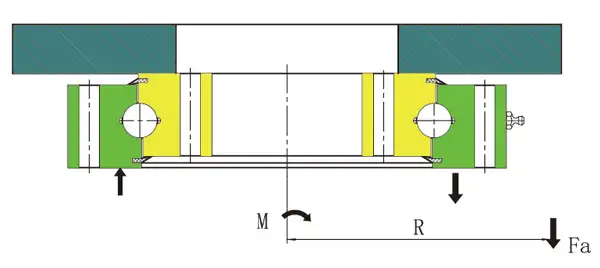
Fig 2. Suspended Mounting Of Slewing Bearing Force Diagram
-
Axial loads: The sheer downward weight of the crane and its lifted load.
-
Radial loads: Horizontal forces caused by wind or centrifugal motion.
-
Tilting moments: The leverage effect created by suspending a heavy load at the end of a long boom.
Why is the Slewing Bearing Crucial for Crane Safety?
The performance and safety of any lifting equipment heavily rely on its foundational components. Here is why the slewing ring is absolutely essential for a crane:
Flawless 360-Degree Rotation
Efficiency on a construction site requires agility. The slewing bearing allows the crane’s boom to rotate continuously in any direction, making material handling faster and highly precise.
Massive Load Distribution
Cranes routinely lift thousands of pounds. The slewing bearing acts as the load-bearing spine of the machine, distributing this massive weight evenly across the undercarriage to prevent structural failure.
Operational Stability
A high-quality, perfectly fitted bearing prevents wobbling. It ensures the crane remains balanced during operation, significantly reducing the risk of tipping or swaying during a heavy lift.
Common Types of Slewing Bearings Used in Cranes
Different crane designs require different load capacities. Consequently, manufacturers use a variety of bearing types based on the crane’s intended workload:
-
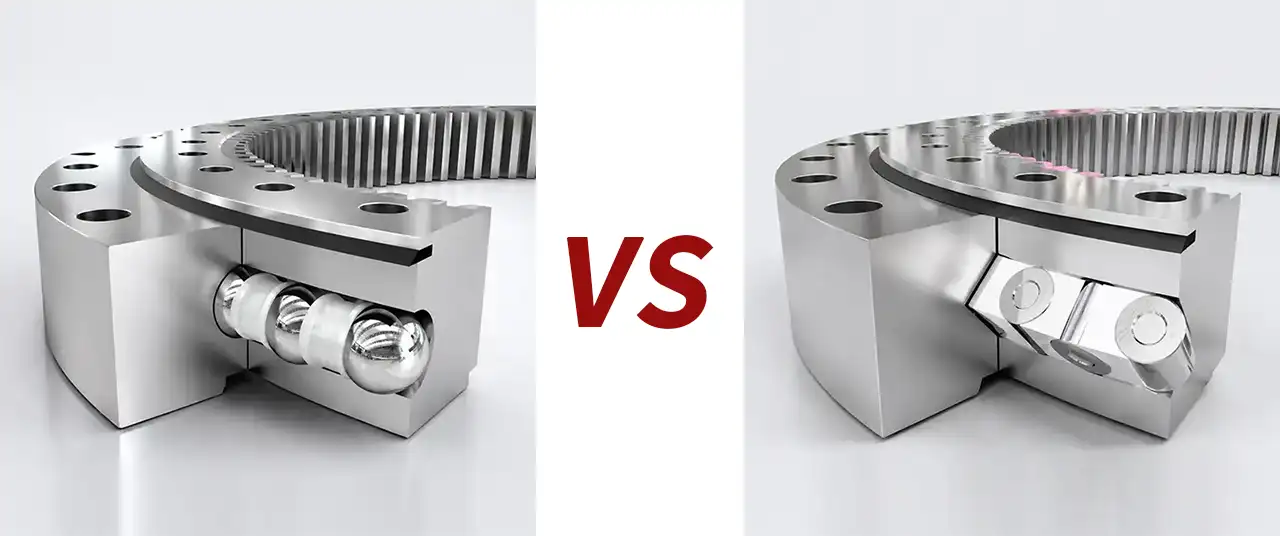
Single-Row Four-Point Contact Ball Bearings: These are ideal for light to medium-duty mobile cranes. They offer excellent cost-effectiveness and handle dynamic loads incredibly well.
-
Double-Row Ball Bearings: By utilizing two rows of steel balls, these bearings provide a higher load capacity and greater stability. They are frequently used in medium-sized tower cranes.
-
Three-Row Roller Slewing Bearings: These are designed for the absolute heaviest lifting. If you see a massive offshore crane or a heavy-duty crawler crane, it almost certainly uses a three-row roller bearing to handle extreme axial and radial loads safely.
Top Maintenance Tips for Your Crane’s Slewing Bearing
Replacing a slewing ring is incredibly expensive and causes massive operational downtime. To maximize the lifespan of a slewing bearing in crane operations, regular maintenance is non-negotiable. Follow these essential tips:
-
Consistent Lubrication: Friction is the primary enemy of any bearing. Apply high-quality grease to the raceways and gear teeth strictly according to the manufacturer’s recommended schedule.
-
Check Bolt Tension: The bolts securing the slewing ring to the crane experience immense stress. You must regularly inspect and tighten these bolts to the required torque specifications using calibrated tools.
-
Monitor for Wear and Tear: Pay close attention to unusual grinding noises, excessive vibrations, or jerky movements during rotation. These are early warning signs of internal bearing degradation.
-
Protect from Debris: Ensure the bearing’s protective seals remain intact. Dirt, sand, and moisture can severely damage the internal rolling elements if they manage to bypass the seals.
Conclusion
The slewing bearing in crane machinery is undeniably the unsung hero of the modern construction site. It bears the weight, provides the essential mobility, and ensures the safety of the entire lifting operation. By understanding how it functions and committing to a rigorous, proactive maintenance routine, you can significantly extend the life of your equipment and keep your projects running smoothly.