Table of contents
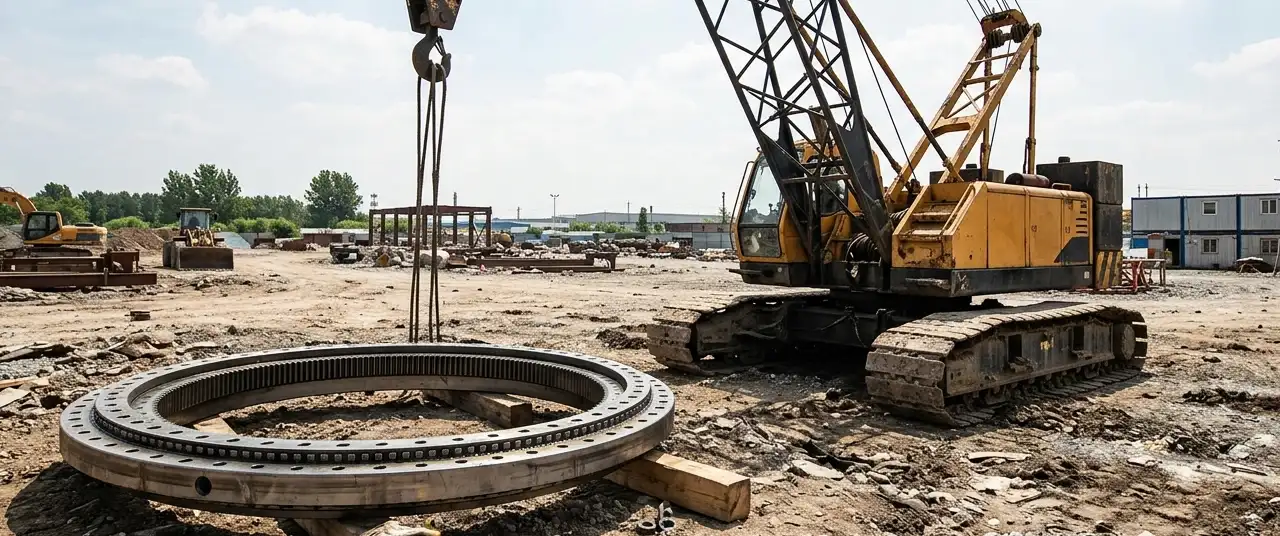
Every time a crane rotates its upper structure to position a load, one component is quietly carrying the entire weight of that rotation: the slewing bearing. It sits at the junction between the crane’s base and its rotating upper works, and it’s arguably the single most load-critical rotating component on the entire machine.
What Exactly Does It Do on a Crane?
The slewing bearing connects the crane’s undercarriage (or tower, on a tower crane) to the rotating upper structure that carries the boom, counterweight, and operator cab. It has to manage three things simultaneously, every time the crane slews:
- Axial load — the full weight of the upper structure, boom, and load pressing straight down
- Radial load — sideways forces from wind, sudden stops, or uneven ground
- Moment load — the tipping force created whenever the boom extends the load away from the center of rotation, which grows larger the further out the boom reaches
This last one is why crane load charts reduce maximum lifting capacity as boom length or reach increases — the slewing bearing (and the rest of the structure) can only absorb so much moment load before exceeding safe limits.
Which Type of Slewing Bearing Do Cranes Actually Use?
It depends on the crane class:
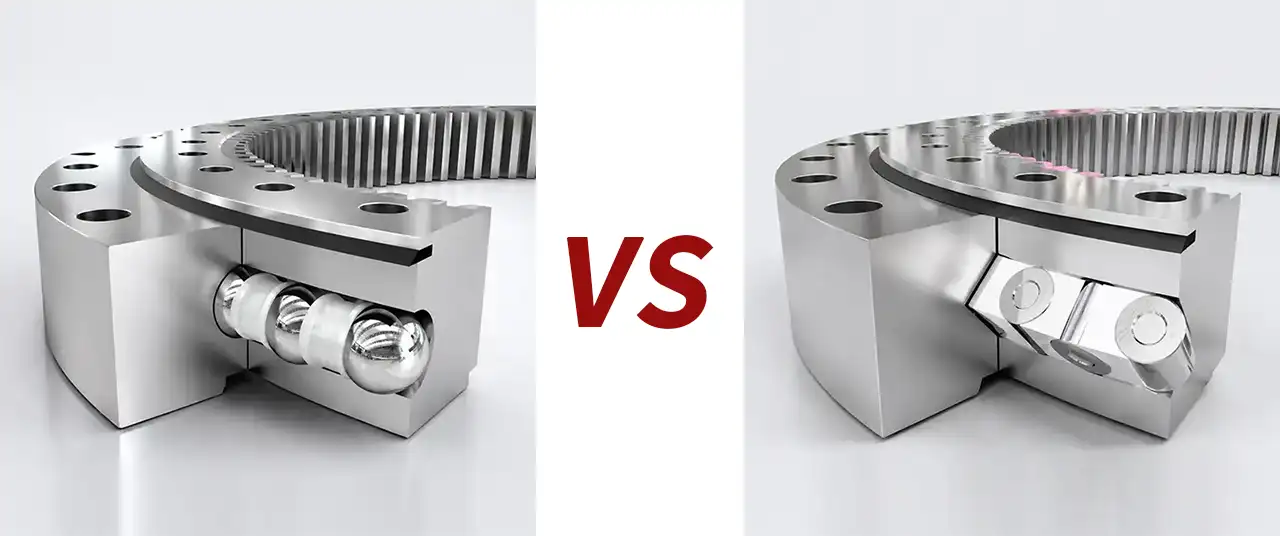
- Mobile and truck-mounted cranes commonly use double-row ball slewing bearings, which split axial and moment load across two rows of balls at different diameters — a good match for the combined weight-and-reach load profile these cranes create.
- Tower cranes also typically rely on double-row ball designs, for the same reason: a strong moment-load capacity to handle the extended jib.
- Very heavy mobile cranes and crawler cranes, especially those rated for higher tonnage, more often step up to three-row roller slewing bearings, where axial, radial, and moment loads each get a dedicated row of rollers to handle the higher combined load.
Nearly all crane slewing bearings are geared, since the crane’s slew drive motor and pinion need to mesh directly with the bearing to control rotation precisely.
Where It’s Mounted and Why That Location Matters
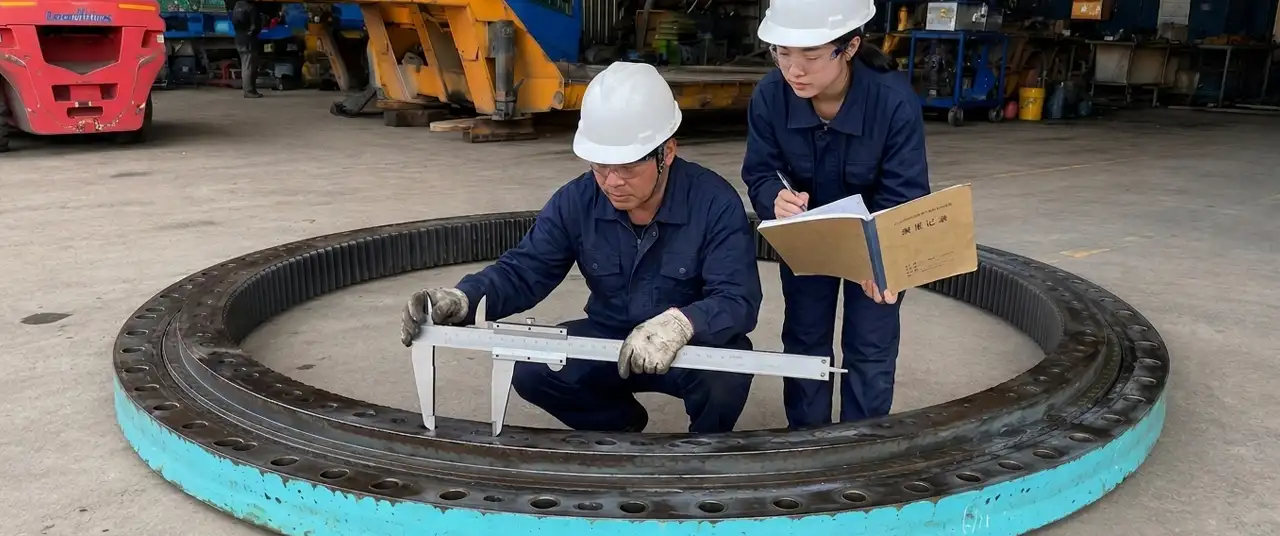
The bearing sits directly at the pivot point between the fixed and rotating structures — meaning every rotational stress, every gust of wind on an extended boom, and every sudden load shift passes directly through it. There’s no other structural member sharing that load path, which is exactly why crane slewing bearings are held to tighter manufacturing and inspection standards than many other rotating components on the machine.
Common Failure Signs Crane Operators Should Know
Because of how much load-bearing responsibility sits on this single component, catching early warning signs matters more here than on lighter equipment:
- Grinding or clicking noise during slewing — often an early sign of raceway wear or contamination
- Increased play or looseness when checking the bearing manually during scheduled maintenance
- Uneven or jerky rotation instead of smooth, consistent slewing
- Visible grease leakage or discoloration at seal points, which can indicate seal damage or contamination getting in
Any of these on a load-bearing crane component warrants inspection before continued operation — this isn’t a “monitor and see” situation given the safety implications of a slewing bearing failure under load.
Why Maintenance Schedules Are Non-Negotiable Here
Crane slewing bearings typically follow strict manufacturer-specified lubrication intervals, and for good reason: this is one of the clearest cases where skipped maintenance directly threatens both equipment life and operator safety, not just cost. Bolt torque checks and seal inspections are usually part of the same scheduled maintenance routine, since all three — lubrication, torque, and seals — interact to determine how long the bearing lasts under repeated heavy rotation.
The Bottom Line
The slewing bearing in a crane isn’t just a rotation component — it’s a primary structural link carrying the crane’s entire operational load every time it swings. Matching the right bearing type to the crane’s load profile, keeping to a strict lubrication and inspection schedule, and treating early warning signs seriously are what keep that link reliable over years of heavy use.