Table of contents

Choosing the wrong slewing bearing rarely shows up right away — it shows up 18 months later, as premature wear, unexpected noise, or a failure nobody can quite explain. Working through these six steps in order, before you ever ask a supplier for a quote, is the most reliable way to avoid that outcome.
Step 1: Calculate Your Actual Loads
Start here, not with diameter. You need three numbers:
- Axial load — total weight pressing down along the rotation axis
- Radial load — sideways force perpendicular to the axis
- Moment load — the tipping force created when weight is applied off-center (this is usually the number people forget to calculate, and the one that matters most)
Moment load, in particular, depends heavily on how far your load extends from the center of rotation — a boom or arm reaching further out multiplies the tipping force even if the actual weight doesn’t change. If you’re not confident calculating this yourself, this is the point to loop in a mechanical engineer.
Step 2: Match Load Profile to a Bearing Configuration
With your three load numbers in hand, the configuration usually becomes clear:
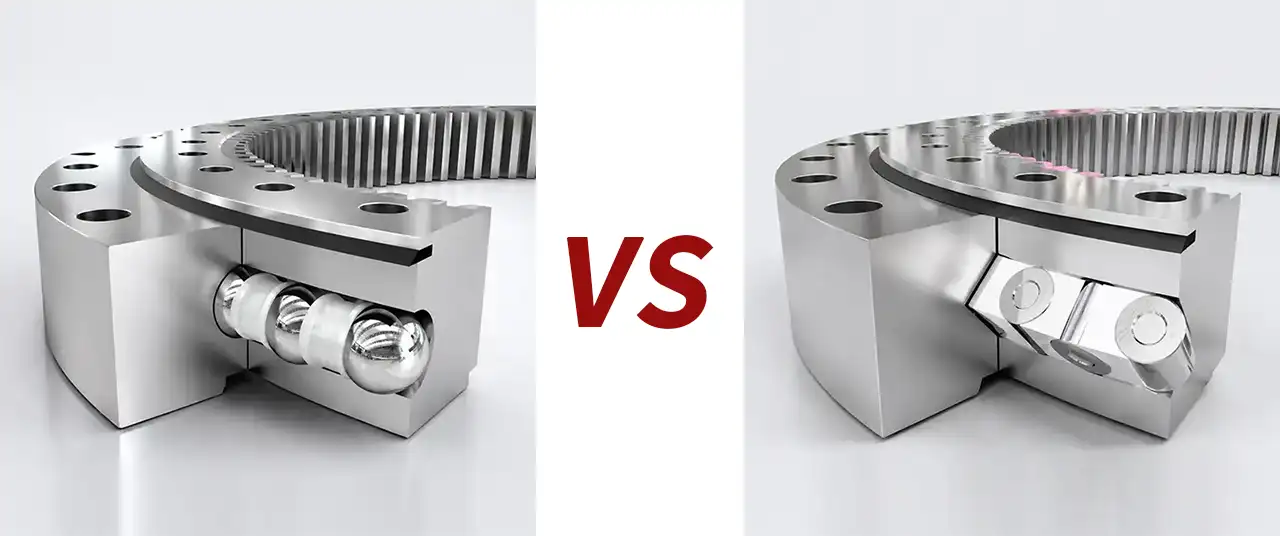
- Single-row ball — light to moderate, fairly balanced loads
- Double-row ball — higher axial and moment loads (common where a load extends out to one side)
- Cross roller — moderate loads, but precision and minimal play matter more than raw capacity
- Three-row roller — heavy combined axial, radial, and moment loads
Resist the temptation to size up “just to be safe” — oversizing adds unnecessary cost and weight without improving reliability if the underlying load calculation was already correct.
Step 3: Decide on Gear Type — Or No Gear at All
Ask a simple question: what’s actually driving the rotation?
- Motor and pinion → you need a geared bearing, with either internal gear (protects the gear teeth from the environment but harder to service) or external gear (easier access and inspection, more exposed to debris)
- Hydraulic cylinders, chain drive, or manual rotation → you likely don’t need gear teeth on the bearing at all
Getting this wrong is one of the most common — and most expensive — ordering mistakes, since it usually means the bearing has to be re-ordered rather than modified.
Step 4: Confirm Mounting Dimensions and Bolt Pattern
This step is unglamorous but unforgiving. You’ll need:
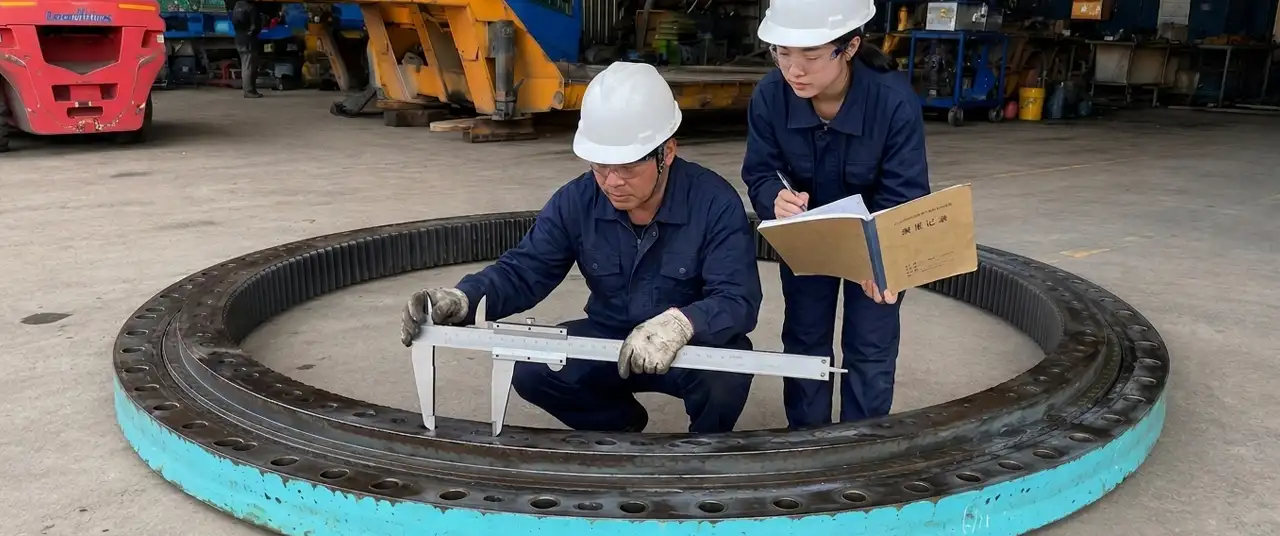
- Bore diameter and outer diameter
- Bolt hole pattern and quantity (must match your mounting structure exactly)
- Overall height and mounting surface flatness requirements
Even a small mismatch here — a few millimeters on hole spacing, for example — can mean the bearing simply doesn’t bolt on. Double-check these dimensions against your actual machine drawings, not a similar-looking bearing from a past project.
Step 5: Factor In the Operating Environment
Two bearings with identical load ratings can have very different service lives depending on where they operate:
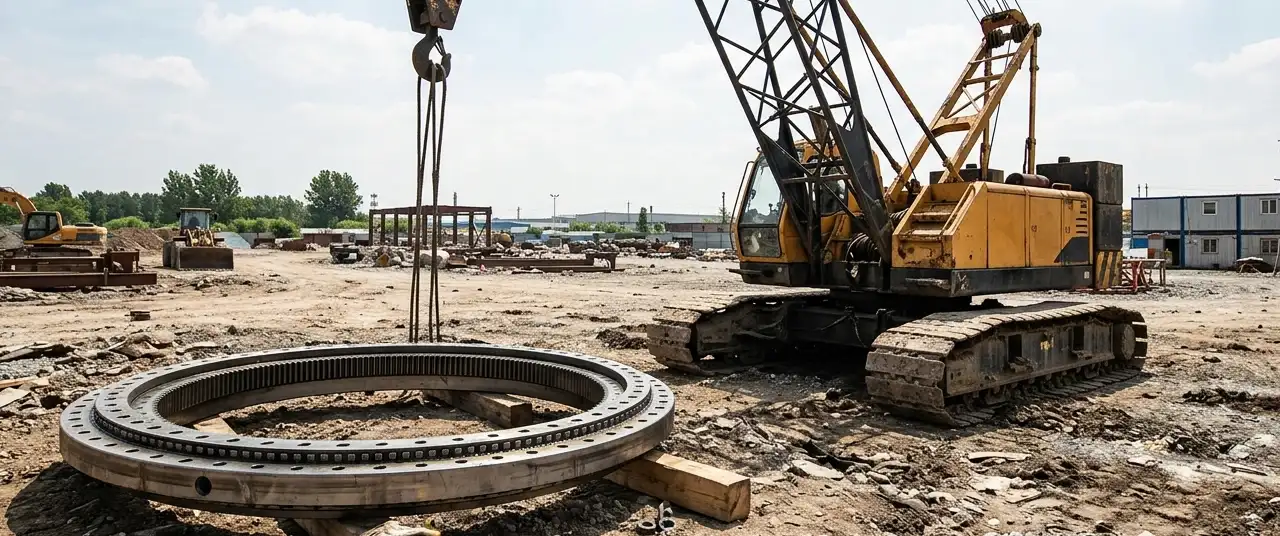
- Outdoor/exposed equipment (cranes, wind turbines) → prioritize seal quality and corrosion-resistant coating
- High-contamination environments (mining, ports, construction sites) → look for enhanced sealing and more frequent lubrication intervals
- Extreme temperature ranges → confirm grease type is rated for your climate, not just a generic default
Skipping this step is how a bearing that performs perfectly in a lab or a milder climate fails early in the field.
Step 6: Decide Between Standard and Custom
Most slewing bearings aren’t off-the-shelf. Once you have load ratings, gear type, mounting dimensions, and environmental requirements locked in, you’re ready to bring a complete specification to a supplier — rather than a rough size and a hope that it fits.
At this stage, a good supplier should be asking you clarifying questions about your load calculations, not just quoting off a diameter. If they aren’t, that’s worth noticing.
Quick Recap
- Calculate axial, radial, and moment loads
- Match those loads to a bearing configuration
- Decide on gear type based on your drive system
- Confirm exact mounting dimensions and bolt pattern
- Account for your operating environment
- Bring a complete spec to your supplier for standard or custom manufacturing
Working through these steps in order — rather than starting from a rough size guess — is what separates a slewing bearing that lasts its full rated life from one that needs replacing far too soon.