Product Details

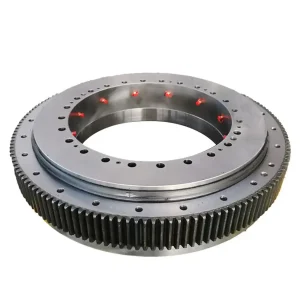
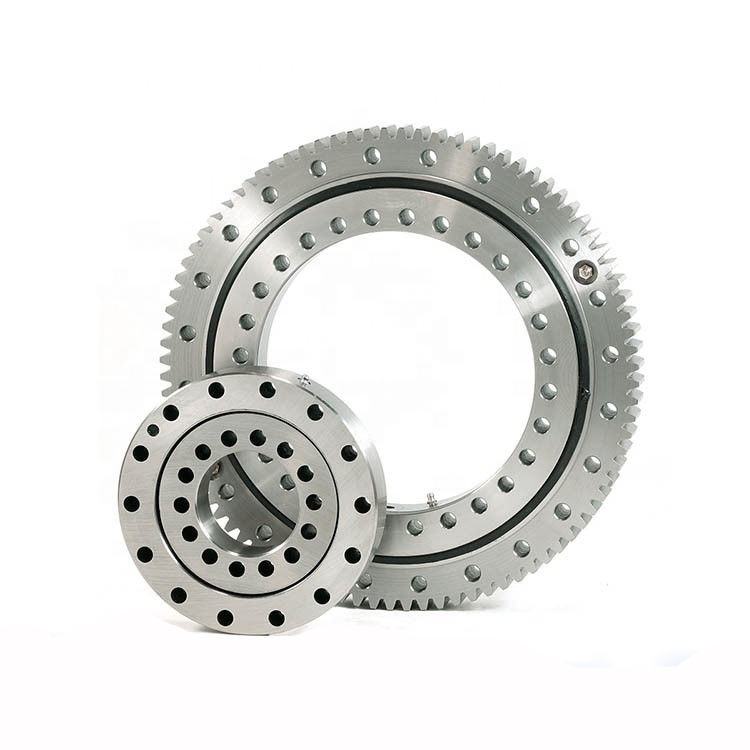
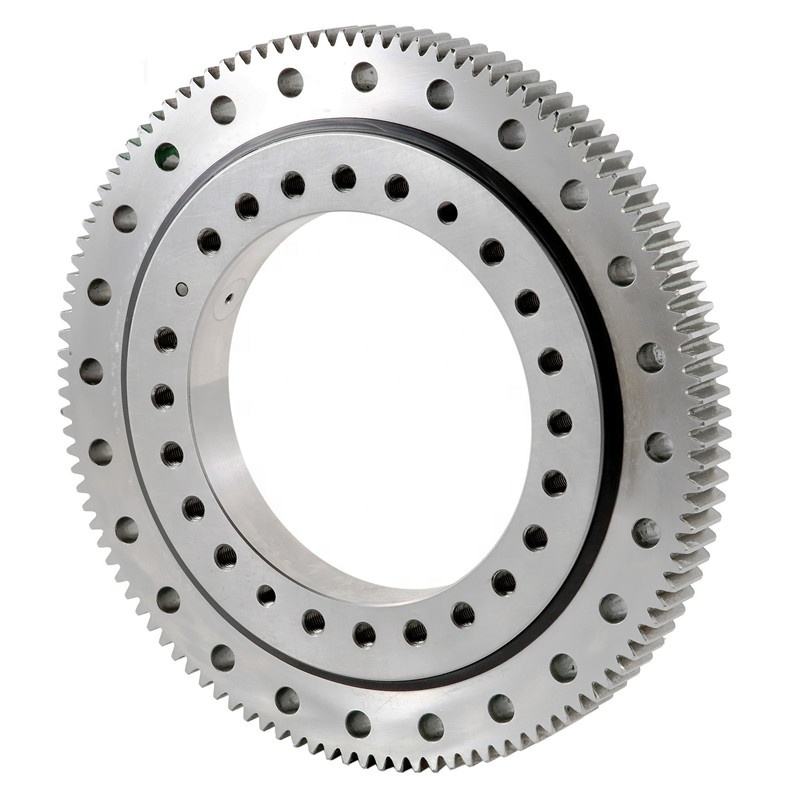
slewing bearing for Tadano crane

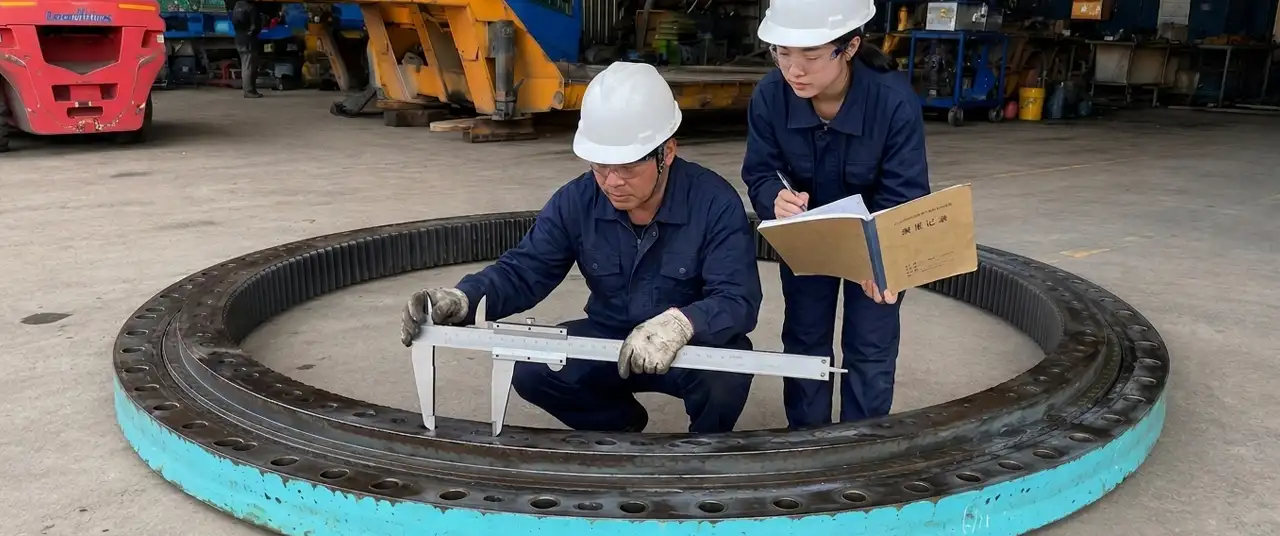
The slewing bearing is a critical component in Tadano cranes, allowing for smooth rotation and precise load movement. It consists of inner and outer rings, rolling elements, cages, and seals, capable of handling axial, radial, and moment loads. Key maintenance steps include regular inspections, proper lubrication, maintaining seal integrity, and tightening bolts. Signs of wear or damage include unusual noise, increased vibration, difficulty in movement, and visible damage. For replacement, safely support the crane, remove the old bearing, clean the mounting surface, and install the new bearing. Proper maintenance and handling ensure the crane’s safety and reliability.

Product Enquiry

Specification

A slewing bearing, also known as a turntable bearing or slewing ring, is a critical component in the Tadano crane’s mechanism. It enables the crane to rotate smoothly and accurately, ensuring the precise movement of the load. Here’s a detailed overview of its components, functions, and maintenance:

ODIDInside Bolt Holes No.Outside Bolt Holes No.Teeth No.MaterialHardnessReplacement
Tadano z30045624019*21mm10*M187450Mn、42CrMo、40CrAbove 210HBTZ300、330、340、360
Tadano z50055733525*22mm10*m169150Mn、42CrMo、40CrAbove 210HBTZ500
unic45523819*21mm11*M167450Mn、42CrMo、40CrAbove 210HBUnic 330、340、360、370

For more models, please contact our engineers.

Components of a Slewing Bearing

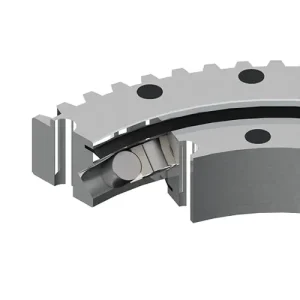
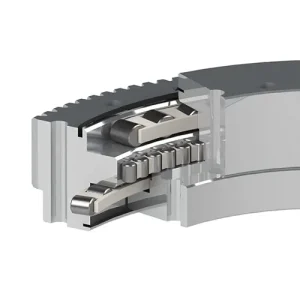
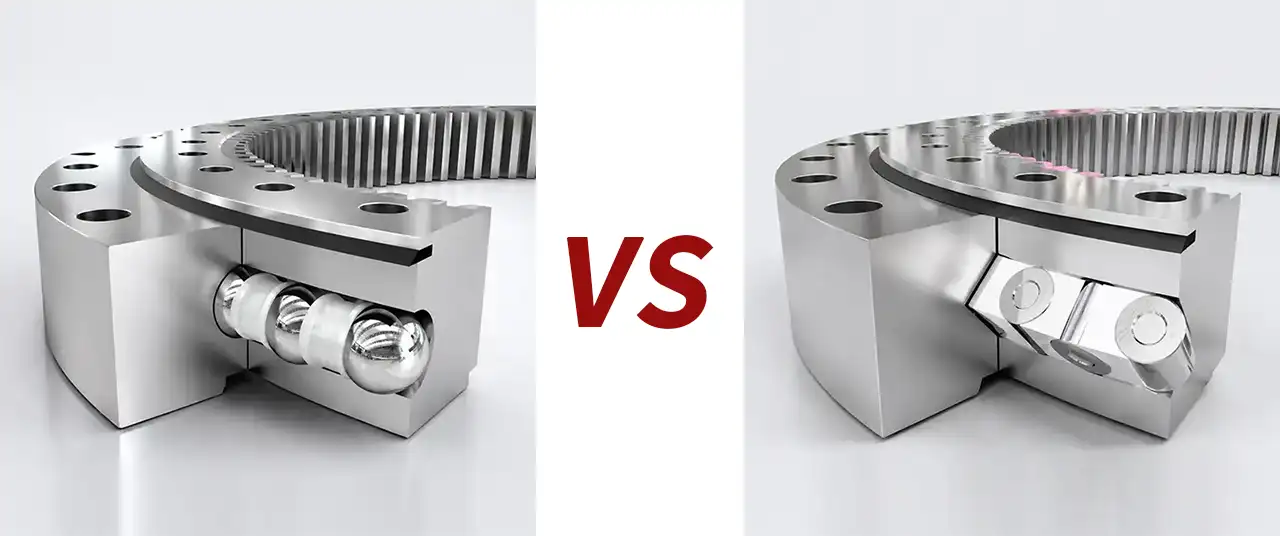
  1. Inner and Outer Rings: These rings house the rolling elements and are connected to the crane’s rotating and stationary parts.
  2. Rolling Elements: Typically balls or rollers that facilitate smooth rotation by reducing friction.
  3. Cages: These structures keep the rolling elements evenly spaced.
  4. Seals: Seals protect the bearing from contaminants such as dirt and moisture.
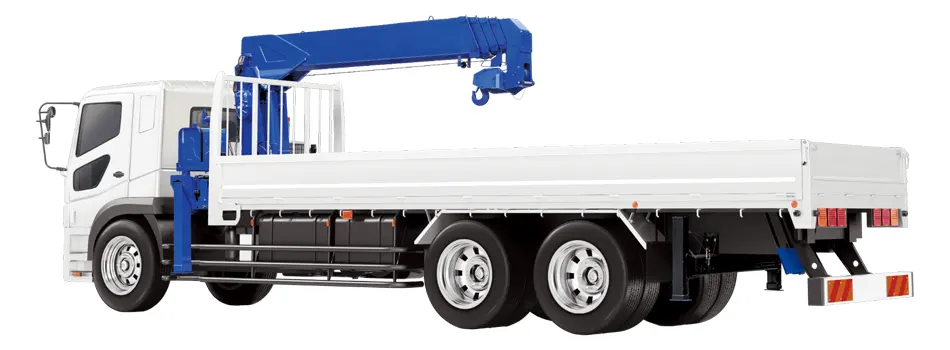
Tadano Crane Slewing Bearing

Functions of a Slewing Bearing

  1. Rotation: Enables the crane to rotate its boom and load around a vertical axis.
  2. Load Support: Handles axial, radial, and moment loads, ensuring stability during operation.
  3. Precision Movement: Allows for precise positioning and movement of the crane’s load.

Types of Loads on Slewing Bearings

  1. Axial Load: Force parallel to the axis of rotation.
  2. Radial Load: Force perpendicular to the axis of rotation.
  3. Moment Load: Torque or rotational force that tends to twist the bearing.

Maintenance and Care

  1. Proper maintenance of the slewing bearing is crucial for the crane’s performance and longevity. Here are some maintenance tips:
  2. Regular Inspections: Periodic checks for wear, corrosion, and lubrication levels.
  3. Lubrication: Use appropriate lubricants and ensure regular lubrication to minimize friction and wear.
  4. Seal Integrity: Inspect and replace seals to prevent contamination.
  5. Bolt Tightening: Check and tighten bolts according to the manufacturer’s specifications to maintain proper clamping force.
  6. Cleaning: Keep the bearing clean from debris and other contaminants.

Signs of Wear or Damage

  1. Unusual Noise: Grinding or clicking sounds during rotation.
  2. Increased Vibration: Excessive vibration may indicate misalignment or wear.
  3. Difficulty in Movement: Stiff or uneven rotation.
  4. Visible Damage: Cracks, chips, or deformation on the bearing surfaces.

Replacement and Repairs

If the slewing bearing shows significant wear or damage, it may need to be repaired or replaced. Here are the general steps for replacement:

  1. Safely Support the Crane: Ensure the crane is securely supported and immobilized.
  2. Remove the Old Bearing: Disconnect and remove the existing bearing carefully.
  3. Prepare the Mounting Surface: Clean and inspect the mounting surfaces for any damage or irregularities.
  4. Install the New Bearing: Align and install the new bearing, ensuring proper lubrication.
  5. Test the Crane: After installation, test the crane’s rotation and load-handling capabilities.

Conclusion

The slewing bearing is a vital component for the operational efficiency of Tadano cranes. Regular maintenance, prompt repairs, and careful handling can extend its life and ensure the safety and reliability of the crane.

When To Choose This Structure — Slewing Bearing
Sheet 01 · Selection Guide

When Should I Choose This Structure?

Before you place an order, check whether a triple-row roller slewing bearing actually matches your equipment’s duty conditions — faster than reading any spec sheet.

  • Your equipment needs continuous 360° rotation under high torque, heavy-load conditions — e.g. cranes, excavators, tunnel boring machines, wind turbine yaw systems.
  • Installation space is limited, and axial load, radial load and tilting moment must be carried by a single bearing rather than a separate bearing-plus-gearbox assembly.
  • The equipment needs a built-in slewing drive gear (internal or external), eliminating extra transmission components and simplifying assembly.
  • The operating environment involves dust, moisture, or large temperature swings, requiring a bearing with built-in sealing and lubrication channels.
  • The project has clear requirements for rotational accuracy and adjustable clearance — e.g. medical equipment, solar tracking mounts, precision turntables.

One-line summary

If your equipment needs to “rotate and carry heavy loads at the same time,” a triple-row roller slewing bearing is usually the most direct, integrated solution.

Typical equipment

Tower crane slewing platforms, crawler crane turntables, excavator upper structures, TBM cutterhead drives, wind turbine yaw/pitch systems, stacker-reclaimer slewing bodies.

When NOT To Choose It — Slewing Bearing
Sheet 02 · When Not To Use

When Should I NOT Choose It?

We’d rather help you find the right solution than sell you the wrong one. Here’s when a slewing bearing may not be the best fit.

  • !
    If your rotational speed requirement exceeds the typical design range for slewing bearings (e.g. high-speed rotating platforms), a cross roller bearing or dedicated high-speed structure is usually a better fit.
  • !
    If overall weight is extremely sensitive for the machine (e.g. drone gimbals, small precision instruments), a thin-section or angular-contact bearing combination may be lighter and more suitable.
  • !
    If budget and production volume favor a standard bearing plus external gear assembly, that may be more cost-effective for non-heavy-duty, non-harsh-environment applications.
  • !
    If installation space is extremely constrained and cannot meet the minimum installation diameter, confirm with our engineers whether a compact custom design is available.

Not sure which case applies to you?

Send us your equipment’s duty conditions (load / speed / space / environment) and our engineers will tell you within 24 hours whether it fits — not just try to sell you something.

Free Duty Assessment →
Required Data For Selection — Slewing Bearing
Sheet 03 · Selection Data

Required Data For Selection

You don’t need a finished drawing to get started — tell us what you already know, and our engineers will help fill in the rest.

CategoryData NeededWhy It Matters
Load ParametersAxial load, radial load, tilting momentDetermines the number of rows and raceway design
Envelope DimensionsInstallation OD / ID, installation height, bolt hole patternDetermines whether a standard size fits or custom sizing is needed
Speed & DutyOperating speed (rpm), continuous or intermittent duty, environmentAffects lubrication method and seal grade
Drive TypeInternal-tooth / external-tooth / no gear (bearing only)Determines gear module, tooth count and precision grade
PrecisionRotational accuracy, clearance range (negative clearance required?)Affects manufacturing process and inspection standard
Drawing / Reference PartExisting drawing, old bearing model, or competitor part numberAllows a direct 1:1 match or replication — the fastest path to selection

No drawing on hand? That’s fine — send us the parameters you know, or a photo of your old bearing’s nameplate.

Send Data Now →
Materials, Hardness, Clearance & Gear — Slewing Bearing
Sheet 05 · Material & Process

Materials / Hardness / Clearance / Gear Treatment

Every batch ships with a material certificate, hardness test report and NDT report — third-party re-inspection is welcome.

01 · MATERIAL

Ring Material

42CrMo / 50Mn (specifiable)

Determines overall strength and fatigue life. Heavy-duty applications use alloy structural steel with quenching & tempering.

02 · HARDNESS

Raceway Hardness

HRC 55–62, depth customizable

Medium-frequency induction hardening gives more uniform hardness than through-hardening, avoiding soft spots.

03 · CLEARANCE

Clearance Grade

Standard or negative, P0–P6

Heavy-duty, low-speed equipment usually uses negative clearance for higher stiffness; precision equipment can go tighter.

04 · GEAR

Gear Treatment

Q&T or induction-hardened teeth

Frequent start/stop or heavy-duty drive applications benefit from hardened tooth flanks for longer life.

Related Applications — Slewing Bearing
Sheet 06 · Applications

Related Applications

Don’t see your industry? Applications go far beyond the examples below — tell us what your equipment does.

Cranes
Excavators & Construction
Wind Turbines
Solar Tracking
Port Machinery
Rotary Platforms
Real Project Case — Slewing Bearing
Sheet 07 · Project Reference

Real Project Case

More project photos, inspection reports and customer references are available on request — happy to sign an NDA if needed.

Custom triple-row roller slewing bearing manufactured for a stacker-reclaimer, Southeast Asia port project
Case File · Port Machinery

Stacker-Reclaimer Slewing Bearing — Custom Project, SE Asia

Background
The customer was using an imported triple-row roller slewing bearing with a 4-month lead time and a high price point.
Requirement
Find a faster-to-deliver alternative while keeping the original installation dimensions and load parameters unchanged.
Solution
Based on the customer’s original part drawing, we replicated the key dimensions and gear geometry 1:1, and raised raceway hardness to HRC 58–62.
45 DaysLead Time
1:1Dimensional Match
2ndRepeat Order
Slewing Bearing Model Finder
Model Finder

Slewing Bearing Model Finder

Filter 463 catalog specifications by dimension. Results update instantly — no page reload, no server round-trip.

Matching 463 / 463 models
ModelStructureGeared TypeOD (mm)ID (mm)HeightModuleTeethWeight (kg)
Header fixed · scroll for more rows

RELATED products

Frequently Asked Questions

Expert Insights and Reliable Solutions to Your Most Common Questions.

FDON GROUP supplies a full range of slewing bearings to meet different industrial needs:

  • Single row four point contact slewing bearings Application: medium loads, precise rotation.
  • Double row ball bearings  Application: higher radial and axial loads.
  • Cross roller bearings –Application: high rigidity, suitable for robots and machining centers.
  • Three row roller bearings – Application: extreme loads in heavy equipment.
  • Ball combine roller bearings –Application:  precise rotational adjustment applications.
  • Customized bearings – tailored for specific equipment requirements.

Typical selection parameter for FDON clients:

Load type: axial, radial, and tilting moment.

Rotation RPM: ensures long service life.

Installation space & mounting dimensions: inner/outer ring diameter, bolt circle.

Precision & rigidity requirements: critical for cranes, excavators, and robots.

FDON engineers provide professional selection guidance according to your equipment and drawings.

FDON GROUP selects materials for strength, wear resistance, and long-term durability:

Slewing ring: 42CrMo, 50Mn, C45N, 40CrNiMo, C48E.

Special forging spare parts: carburized/hardened steels for gear teeth (20CrMnTi, 18CrNiMo7‑6).

Corrosion resistant: SS 304, 316L, duplex stainless steel.

Surface treatments: heat treatment, quenching, carburizing, induction hardening, and surface coating(Four-Layer Packing, Strong Anti-Rust Oil, Black Oxide Treatment, Jet Black Paint Finish, Hot-Dip Galvanizing (CGL), Electro-Galvanizing (EGL), Hot-Dip Galvanizing + Paint Finish)

Correct installation with flat surfaces.

Proper lubrication using grease.

Avoid overloading or shock loads over capacity.

Monitor operating conditions regularly to prevent debris entry.

Typical factors observed by FDON engineers:

  • Insufficient or incorrect lubrication.
  • (dust, metal particles) in raceways.
  • Rolling element or track damage.
  • Uneven mounting surfaces or misalignment.
  • Incorrect bolt torque(below grade 8.8) or preloading.

In-stock: 3–7 days.

Custom: 2–6 weeks depending on size, load, and precision.

Warranty: 1 year

Lifetime Free Spare Parts: Glue, seals, steel ball

Yes — FDON GROUP offers:

Detailed installation manuals.

Online engineering support.

Guidance for lubrication, maintenance, and troubleshooting solution.

Full range of materials and heat treatments for various load conditions.

High precision and strict quality inspection standards.

Engineering support before and after delivery.

Customization to exact equipment requirements.

Proven performance in cranes, excavators, robotics, wind turbines, and heavy machinery etc.