When you look up at a massive construction site, the most impressive piece of equipment is almost always the tower crane. These mechanical giants can lift multi-ton loads of steel and concrete hundreds of feet into the air. However, lifting is only half the battle; the crane must also be able to rotate those heavy loads precisely.
This critical 360-degree rotation is made possible by a single, highly engineered component: the slewing ring tower crane bearing.
In this comprehensive guide, we will explore how the tower crane slewing mechanism works, how to properly maintain these heavy-duty crane bearings, and the warning signs that indicate it is time for a replacement.
What is a Slewing Ring in a Tower Crane?
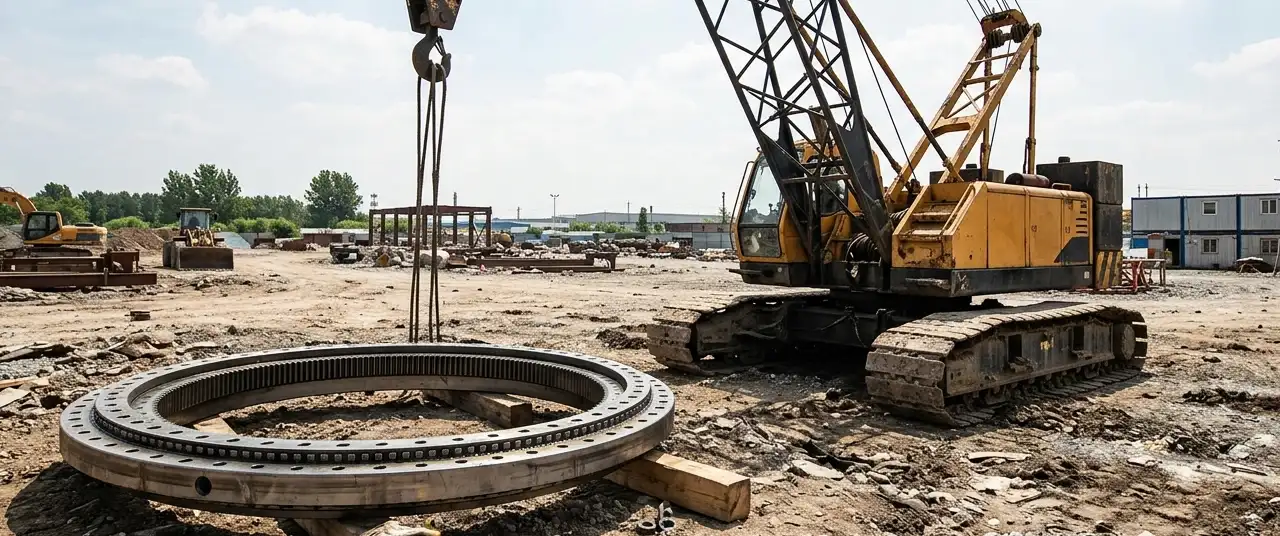
A slewing ring (or slewing bearing) is a large-size rolling-element bearing capable of accommodating massive axial, radial, and overturning moment loads simultaneously.

In a tower crane, the slewing ring acts as the primary rotational joint. It is installed at the top of the crane’s vertical mast (the tower) and directly beneath the horizontal working arm (the jib) and the counter-jib. This strategic placement allows the entire upper section of the crane to rotate freely while remaining securely anchored to the stationary mast below.
Without a high-quality slewing ring tower crane setup, operators would not be able to swing materials precisely where they are needed on the job site.
How Does the Tower Crane Slewing Mechanism Work?
To understand how a tower crane slews, you have to look at the interaction between the bearing and the drive motors. The slewing mechanism generally consists of three main parts:
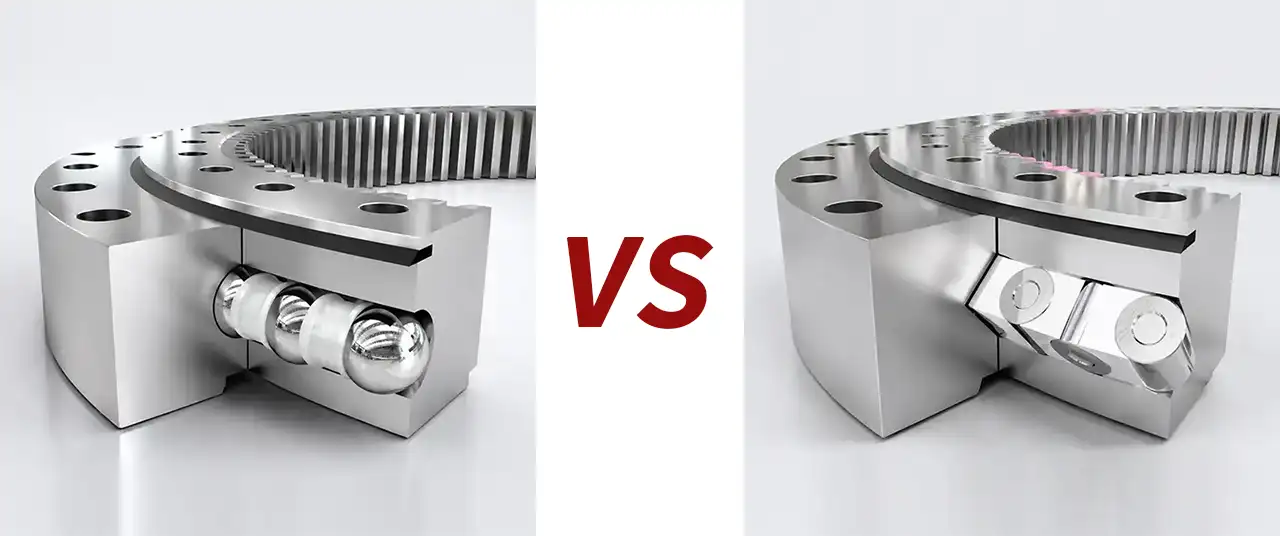
- The Slewing Ring: Usually a robust single-row or double-row ball bearing, or a three-row cylindrical roller bearing for mega-cranes. It features gear teeth cut directly into either its inner or outer ring.
- The Slewing Motor: An electric or hydraulic motor mounted to the rotating structure of the crane.
- The Pinion Gear: A small gear attached to the motor that meshes perfectly with the gear teeth on the slewing ring.
When the operator initiates a turn, the slewing motor spins the pinion gear. Because the pinion gear is meshed with the teeth of the stationary ring bolted to the mast, the gear “walks” around the ring, pulling the entire upper crane structure with it.
Crucial Maintenance for Crane Slewing Rings
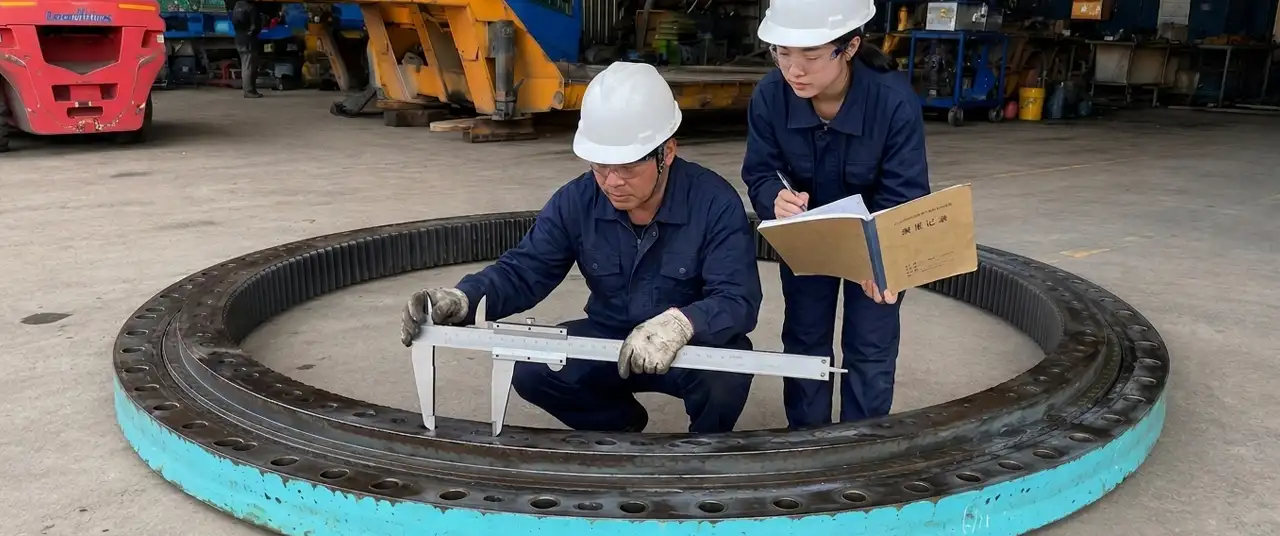
Because these components operate hundreds of feet in the air while supporting extreme weights, crane slewing ring inspection and maintenance are critical for job site safety. A failure here is catastrophic.
To maximize the lifespan of your bearing, follow these mandatory maintenance protocols:
1. Consistent Lubrication
The internal raceway and the external gear teeth must be heavily lubricated to reduce friction and prevent wear. You should pump fresh, extreme-pressure (EP) grease into the bearing at regular intervals. Ensure the crane is rotated during greasing so the lubricant spreads evenly across all internal balls or rollers.
2. Bolt Torque Inspections
The slewing ring is attached to the crane mast and jib using dozens of high-tensile bolts. Over time, heavy lifting and constant vibration can stretch or loosen these bolts. A core part of any maintenance routine is using a hydraulic torque wrench to verify that every bolt remains tightened to the manufacturer’s exact specifications.
3. Checking the Seals
The rubber seals surrounding the bearing gap keep abrasive dirt, rainwater, and corrosive elements out of the internal raceway. If you spot a cracked, torn, or missing seal during an inspection, it must be replaced immediately.
Signs You Need a Tower Crane Slewing Bearing Replacement
Even with perfect maintenance, the intense stress placed on a slewing ring tower crane bearing means it will eventually reach the end of its fatigue life. Catching a failing bearing early is crucial. Look out for these major warning signs:
- Unusual Grinding or Popping Noises: If the crane groans, pops, or grinds loudly during rotation, the internal rolling elements or the raceway are likely damaged.
- Metal Flakes in the Grease: When you purge old grease during lubrication, inspect it closely. The presence of shiny metal shavings indicates severe internal wear.
- Excessive Play or Rocking: If the crane’s upper structure tilts or rocks noticeably backward and forward when a load is picked up or dropped, the bearing’s internal clearances have worn down to dangerous levels.
- Uneven Gear Wear: Inspect the gear teeth. If the teeth are wearing down unevenly or becoming razor-sharp, the pinion gear and the slewing ring are no longer meshing correctly.
Conclusion
The slewing ring tower crane bearing is the unsung hero of the construction industry. By understanding how the slewing mechanism operates and strictly adhering to a rigorous maintenance and inspection schedule, you can ensure your crane operates safely and efficiently for years.