Introduction
If you have ever watched a massive construction crane pivot smoothly or a wind turbine adjust its face to the wind, you have witnessed the power of a slewing ring. A common search query entered by engineering enthusiasts and machinery operators alike is: “What do slewing rings reduce friction?”
While the phrasing might seem a bit specific, the underlying question is fundamental to modern engineering. Slewing rings (also known as slewing bearings or turntable bearings) are designed to support heavy loads while allowing smooth, rotational movement.
In this comprehensive guide, we will break down exactly how these large-diameter bearings minimize friction, the components that make it possible, and why they are essential for today’s heavy machinery.
The Mechanics: What Do Slewing Rings Reduce Friction Against?
At its core, a slewing ring reduces the immense friction that would normally occur when two heavy metal surfaces grind against each other under extreme pressure.
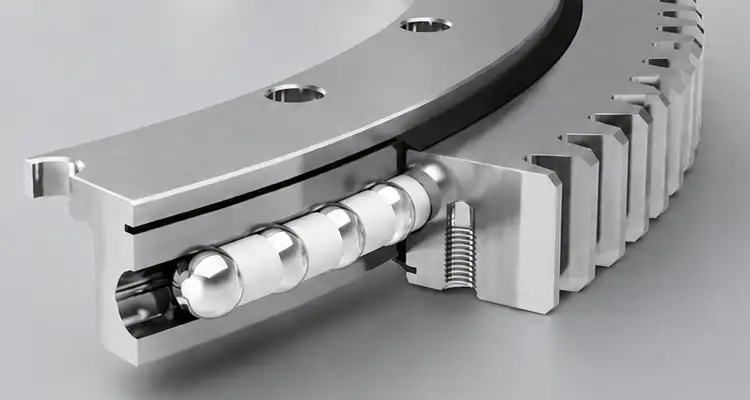
When heavy machinery—like an excavator or a massive radar tower—needs to rotate, it generates enormous axial (downward) loads, radial (side-to-side) forces, and tilting moments. Without a specialized bearing, the metal-on-metal friction would cause the machine to seize, overheat, or quickly destroy itself. Slewing rings reduce this friction by replacing sliding motion with rolling motion.
Key Friction-Reducing Components
To fully understand how they operate, we must look inside the bearing. Here are the primary components working together to ensure smooth rotation:
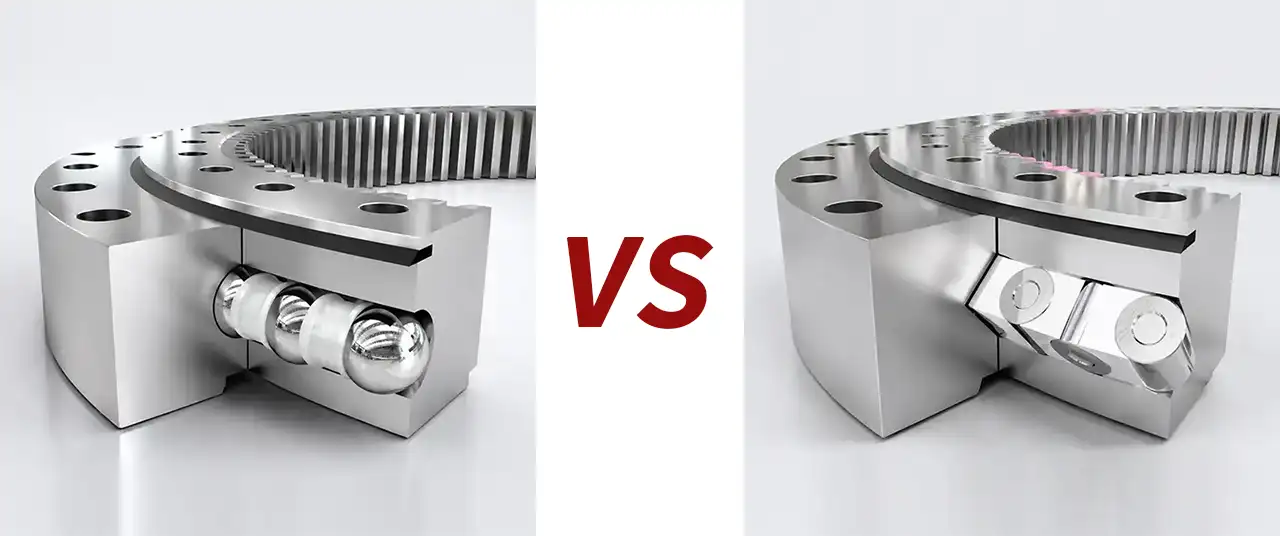
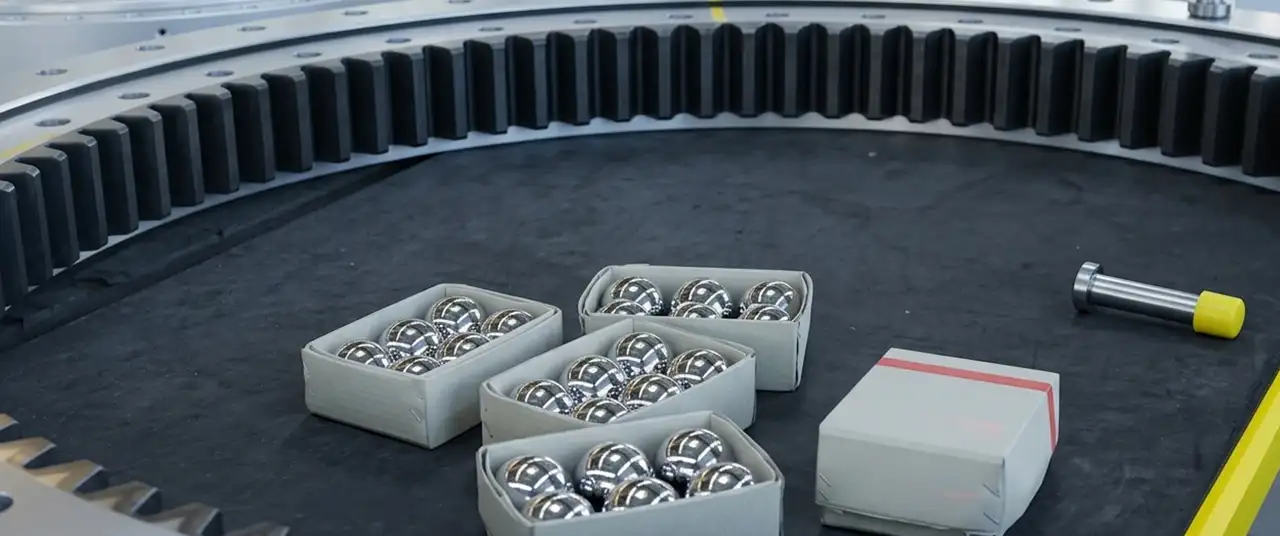
- Rolling Elements: Instead of flat surfaces rubbing together, slewing rings utilize steel balls or cylindrical rollers. Because these elements are spherical or cylindrical, they have a microscopic contact area with the surrounding metal, which drastically cuts down on rotational resistance.
- Hardened Raceways: The rolling elements travel along circular tracks called raceways. These tracks are heavily hardened and precision-machined to ensure the balls or rollers glide seamlessly without catching or grinding.
- Spacers and Cages: To prevent the rolling elements from crashing into one another—which would create internal friction—spacers or cages are used to keep them evenly distributed throughout the ring.
- Lubrication and Seals: Proper greasing is vital. High-quality lubrication creates a thin film that prevents direct metal-on-metal contact. Furthermore, integrated seals keep the grease inside the bearing while locking out dust, dirt, and water, which are major culprits of friction and wear.
Why is Friction Reduction Vital for Heavy Machinery?
Reducing friction is not just about making rotation smooth; it is a critical requirement for operational safety and mechanical longevity. Here is why engineers prioritize low-friction slewing drives:
- Energy Efficiency: High friction requires more power to overcome. By lowering the resistance, machines require less energy (fuel or electricity) to rotate, reducing overall operational costs.
- Decreased Wear and Tear: Excessive friction leads to heat generation and material degradation. A well-designed slewing ring bearing extends the lifespan of the equipment by minimizing this mechanical stress.
- Precision and Control: In applications like robotic arms or solar trackers, jerky movements caused by high friction are unacceptable. Low friction ensures micro-adjustments can be made smoothly and accurately.
Trending Applications of Slewing Ring Bearings
Because they are so effective at handling complex loads while reducing friction, slewing rings are highly sought after across multiple trending industries.
- Renewable Energy: Both wind turbines (for blade pitch and nacelle yaw) and solar tracking panels rely on slewing bearings to follow the elements efficiently.
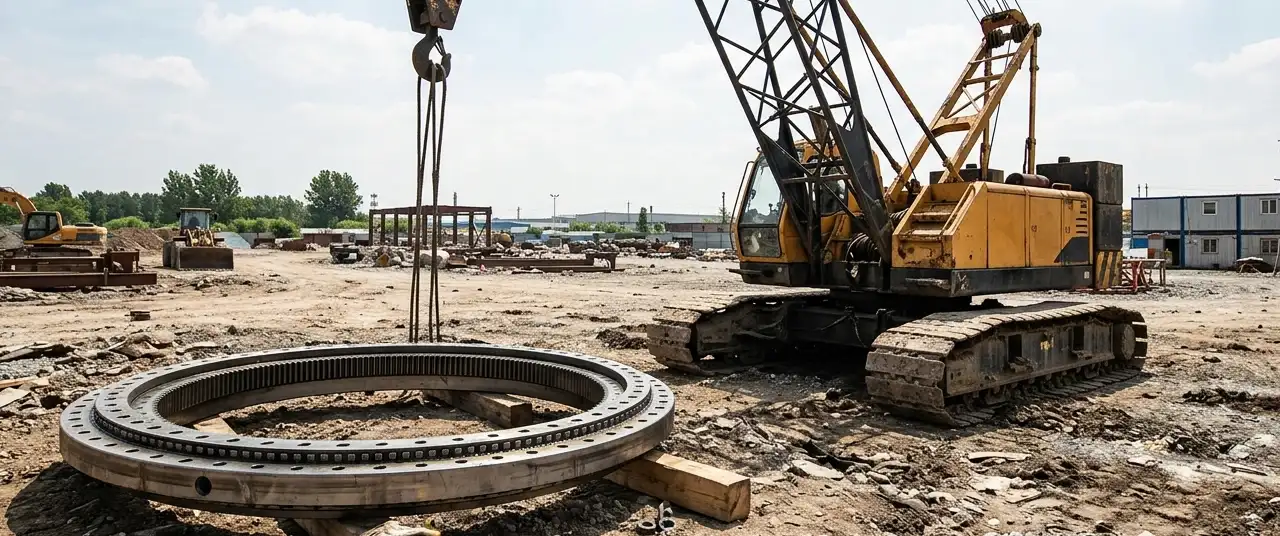
- Construction Equipment: If you search for an excavator slewing ring or crane bearings, you will find that these machines depend entirely on these rings to swing heavy loads safely across job sites.
- Medical Equipment: High-precision, low-friction slewing rings are used in MRI and CT scanners to rotate heavy imaging equipment around the patient quietly and smoothly.
Maintenance Tips to Keep Friction Low
Even the best slewing rings will eventually succumb to friction if not properly maintained. To ensure your bearing operates flawlessly, follow these essential maintenance steps:
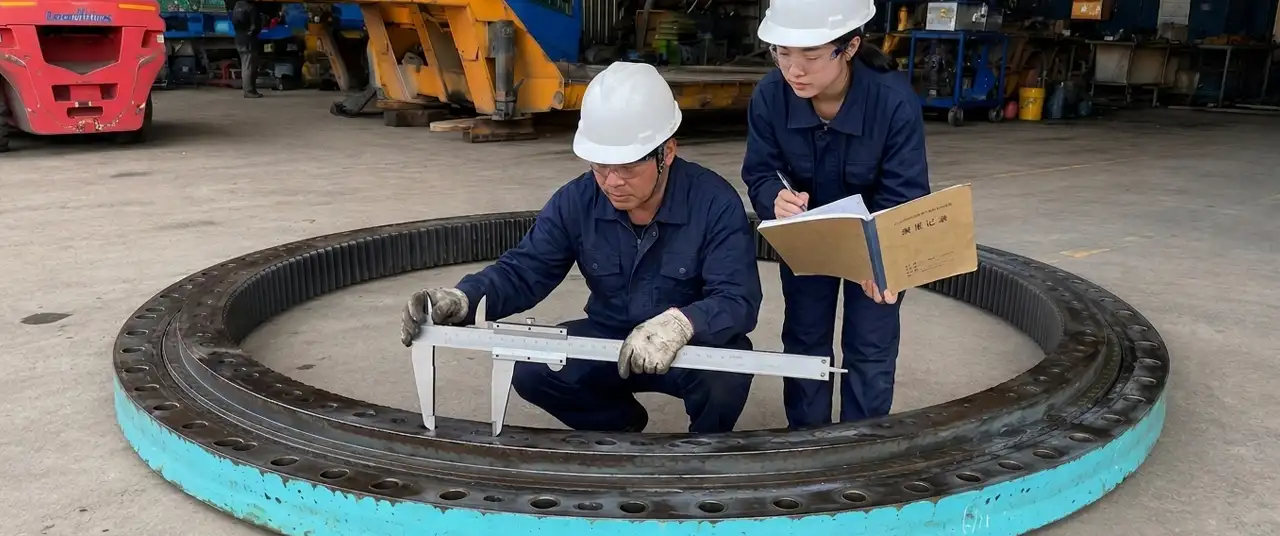
- Stick to a Greasing Schedule: Always lubricate the raceways and the gear teeth according to the manufacturer’s intervals.
- Inspect the Seals: Regularly check the rubber or polyurethane seals for cracks. If contaminants get inside, friction will spike immediately.Monitor for Noise: A healthy slewing ring is relatively quiet. Grinding, popping, or squeaking sounds are immediate indicators of high friction and potential internal damage.
Conclusion
So, to answer the question—what do slewing rings reduce friction?—they eliminate the destructive metal-on-metal sliding that occurs under heavy loads, replacing it with smooth, lubricated rolling motion.
By utilizing precision rolling elements, hardened raceways, and robust sealing systems, slewing rings ensure that everything from your local construction crane to cutting-edge wind turbines can rotate efficiently, safely, and with minimal resistance. Understanding these mechanics is the first step toward selecting, operating, and maintaining heavy equipment effectively.