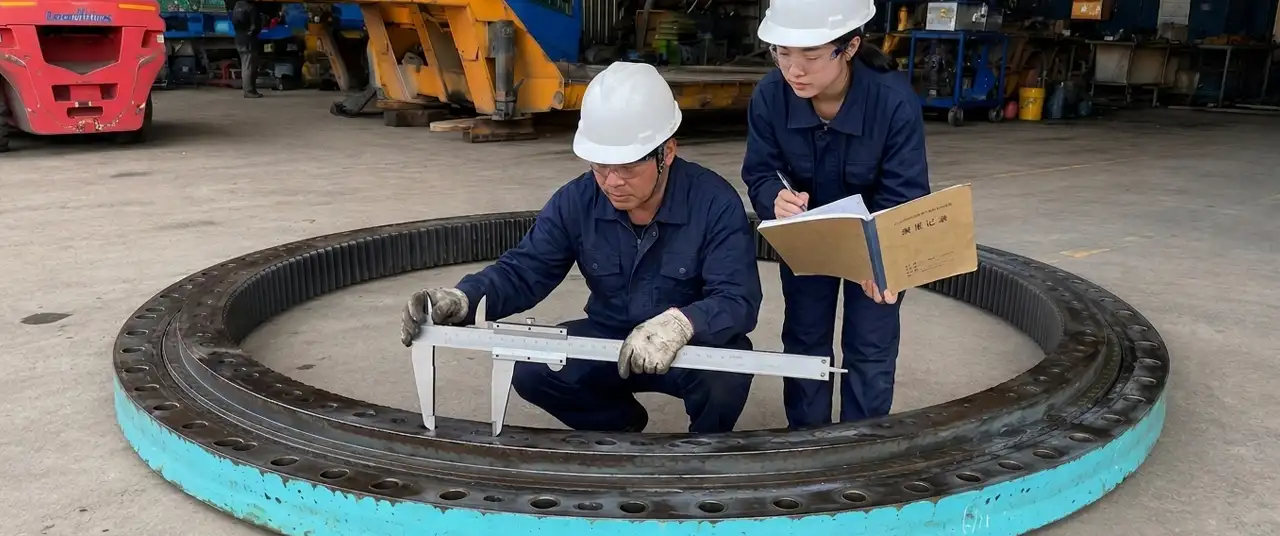
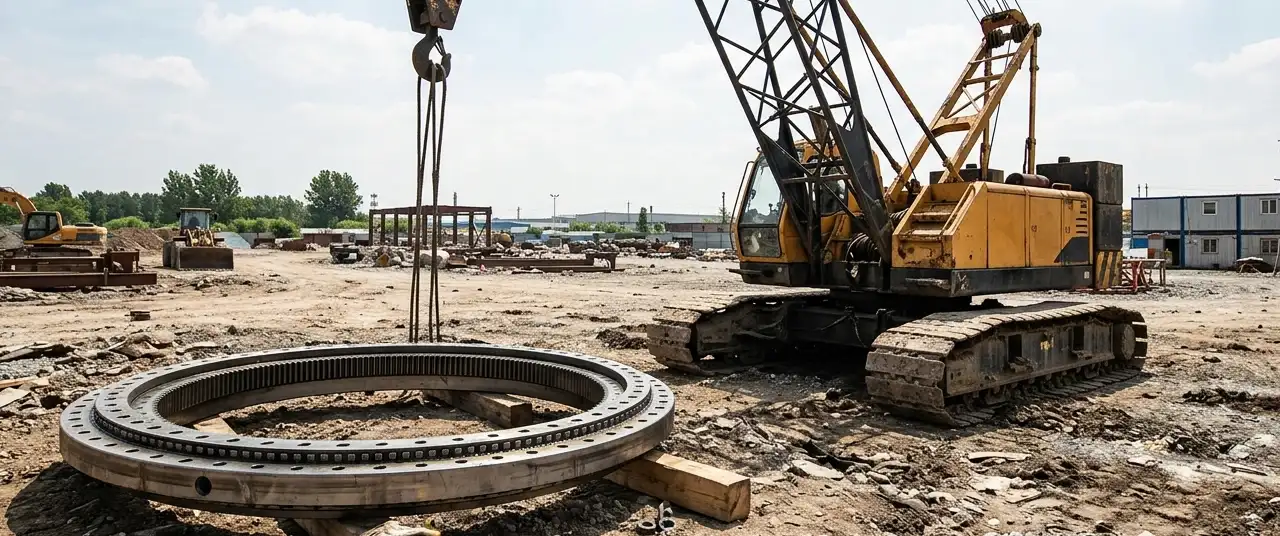
In the world of mechanical engineering, achieving 360-degree rotation under immense weight is a significant challenge. The solution is the turntable bearing (or slewing ring).
If you’ve ever asked, “What are turntable bearings?“, you likely need to understand how these components handle axial, radial, and moment loads simultaneously. This guide provides a deep dive into their technical specs, types, and selection criteria.
1. The Anatomy & Function of a Slewing Ring
A turntable bearing is not your average ball bearing. While a standard bearing is designed to sit on a shaft, a turntable bearing serves as a structural interface between two machine parts.
Key Components:
-
Inner/Outer Rings: Forged from 42CrMo or C45 steel.
-
Rolling Elements: Chrome steel balls or rollers.
-
Integrated Gearing: Simplifies the drive system (Internal, External, or Gearless).
-
Mounting Holes: Threaded or through-holes for easy bolting.
2. Technical Comparison: Types of Turntable Bearings
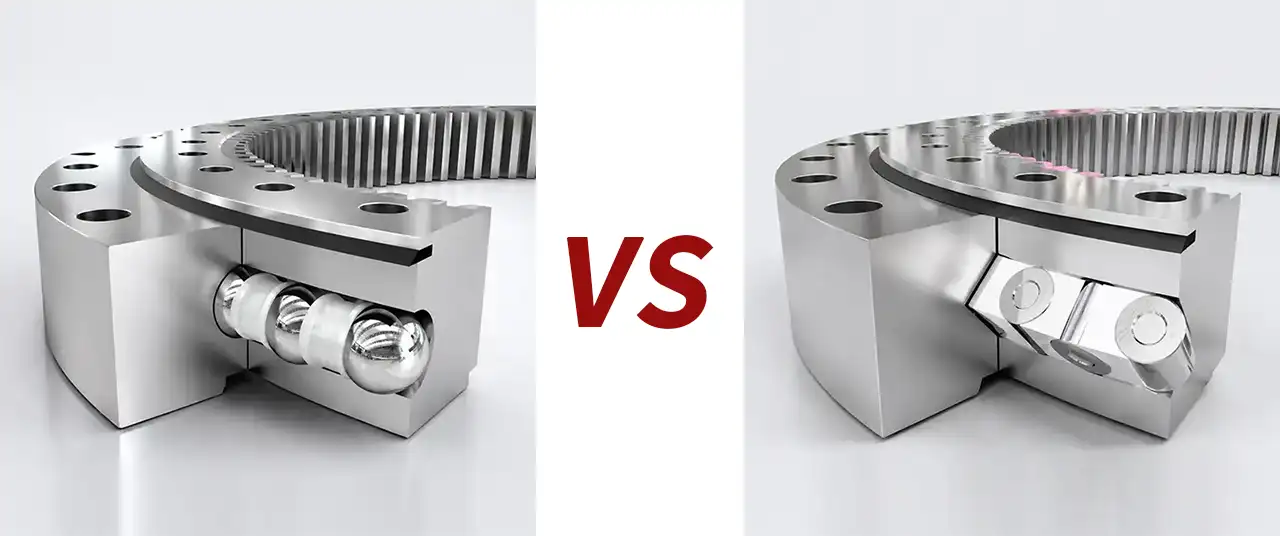
Selecting the right design is critical. The following table compares the most common configurations found in a standard turntable bearing catalog.
Table 1: Bearing Type Performance Comparison
| Bearing Type | Load Capacity | Precision | Speed | Typical Application |
|---|---|---|---|---|
| Single-Row Ball | Moderate | Standard | High | Light cranes, Turntables |
| Double-Row Ball | High | Standard | Moderate | Forest harvesting, Mining |
| Crossed Roller | High | Very High | Moderate | Robotics, Machine Tools |
| Three-Row Roller | Extreme | High | Low | Offshore rigs, Ship cranes |
3. Detailed Specifications: Load & Material
When engineers ask “What are turntable bearings?“, they are often looking for the limits of what these parts can handle. Below is a representative data table for standard industrial sizes.
Table 2: Representative Specifications for Heavy-Duty Turntable Bearings
| Outer Diameter (mm) | Ball/Roller Size (mm) | Gear Module (m) | Static Load (kN) | Weight (kg) |
|---|---|---|---|---|
| 500 mm | 20 mm | 5 | 450 | 45 kg |
| 1000 mm | 30 mm | 8 | 1,200 | 180 kg |
| 2000 mm | 50 mm | 14 | 4,800 | 950 kg |
| 4000 mm+ | Custom | 20+ | 15,000+ | 3,000+ kg |
Note: Actual load capacities vary significantly based on material hardening (induction hardening of raceways) and bolt grade used (typically 10.9 or 12.9).
4. Selection Criteria: How to Choose
Choosing the correct turntable bearing size involves more than just measuring the diameter. You must consider the Load Case:
-
Static Load: The maximum weight the bearing holds while stationary.
-
Dynamic Load: The force applied while the bearing is in motion.
-
The Resultant Moment: Calculated using the formula:
M=F×L(Where M is the overturning moment, F is the force/weight, and L is the distance from the center of rotation).
5. Industrial Applications & Case Studies
-
Renewable Energy: Wind turbine pitch bearings allow blades to rotate to catch the wind optimally.
-
Defense: Tank turrets and radar pedestals require high-precision crossed-roller bearings for target tracking.
-
Medical: High-speed CT scanners require “whisper-quiet” operation and minimal vibration.
6. Maintenance Checklist for Longevity
To avoid catastrophic failure, follow this Slewing Ring Maintenance Schedule:
-
Lubrication (Every 100-200 hours): Use high-pressure (EP) grease. Rotate the bearing during greasing to ensure even distribution.
-
Bolt Inspection (Every 6 months): Use a torque wrench to ensure mounting bolts haven’t loosened due to vibration.
-
Seal Inspection: Check for cracks or hardening. A compromised seal allows abrasive dust to enter the raceway, leading to “pitting.”
7. Frequently Asked Questions (FAQ)
Q: What is the lead time for custom turntable bearing sizes? A: While standard sizes are often in stock, custom-engineered bearings for mining or offshore use can have lead times ranging from 8 to 20 weeks due to specialized forging and heat treatment.
Q: Can I use a turntable bearing vertically? A: Yes, but it must be specifically designed for “radial” priority. Most standard slewing rings are optimized for horizontal (axial) mounting.
Q: Why choose an internal gear over an external gear? A: Internal gears offer better protection for the pinion and are more compact. External gears allow for larger pinions and easier maintenance access.
Conclusion
Understanding what are turntable bearings is the first step toward building more efficient, robust machinery. By balancing load capacity, precision requirements, and maintenance needs, you can select a component that ensures decades of reliable service.
Ready to find the right part? [Browse our Turntable Bearing Catalog] | [Request a Technical Quote]